Featured journal
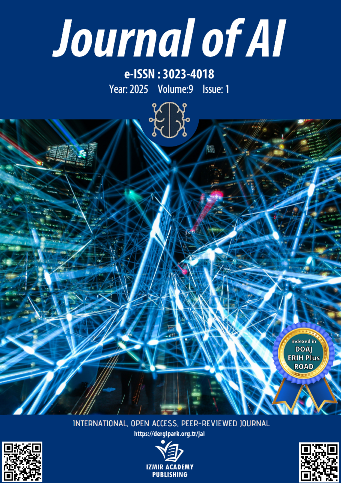
Journal of AI
Data, artificial intelligence and machine learning, etc.

Journal of Metaverse

Journal of Emerging Computer Technologies

İzmir Journal of Social Sciences

Health Informatics and Engineering
Planning and Establishment Phase
Animal Health Informatics
Planning Phase
Ege Journal of Educational Technologies
Passive-Changed NameBOOKS

Published Book: 2026
Authors: Samet AYIK, Hafize Nurgül DURMUŞ ŞENYAPAR, Ramazan BAYINDIR, Ömer AYDIN, Enis KARAARSLAN, Aybeyan SELİM, İlker ALİ, Arafat USEINI, Havva SABANI, Musa ATAŞ, Senem YAZICI YILMAZ, Pei LIU, Joshua Ojo NEHINBE
Agentic AI in the Age of Autonomy with Concepts and Case Studies
Book Series: Future Tech Horizons
Authors: Samet AYIK, Hafize Nurgül DURMUŞ ŞENYAPAR, Ramazan BAYINDIR, Ömer AYDIN, Enis KARAARSLAN, Aybeyan SELİM, İlker ALİ, Arafat USEINI, Havva SABANI, Musa ATAŞ, Senem YAZICI YILMAZ, Pei LIU, Joshua Ojo NEHINBE
Editors: Ömer Aydın, Enis Karaarslan, Aybeyan Selim
ISBN: 978-625-96456-4-3
 Published Book: 2026
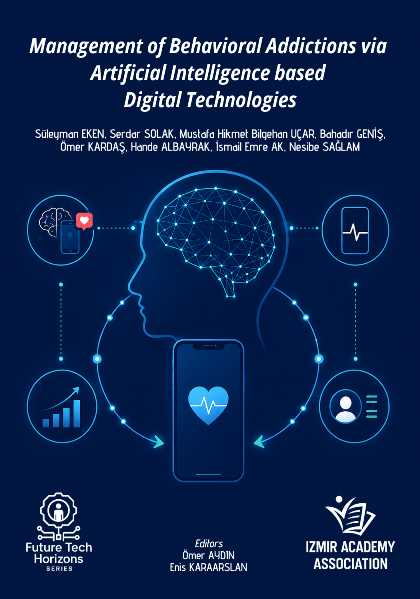
Management of Behavioral Addictions via Artificial Intelligence based Digital Technologies
Authors: Süleyman EKEN, Serdar SOLAK, Mustafa Hikmet Bilgehan UÇAR, Bahadır GENİŞ, Ömer KARDAŞ, Hande ALBAYRAK, İsmail Emre AK, Nesibe SAĞLAM
Editors: Ömer Aydın, Enis Karaarslan
ISBN: 978-625-96456-3-6
 Published Book:2025
The Age of Generative Artificial Intelligence
Book Series: Future Tech Horizons
Authors: Söz Tuana DEMİR, Nida GÖKÇE NARİN, Melih Selami SAĞCAN, Erşan EFE, Ali Abbas DOĞAN, Erdil ASLAN, Melih TAKYACI, Niyazi Cenk GENEK, Bertuğ TAŞ, Selim Esad ALKAN, Arda GÜR, Muhammet DAMAR, Enis KARAARSLAN, Ömer AYDIN, Abdülkadir AKYILDIZ, Süleyman EKEN, Fatih Emre YILDIZ, Fatih Sinan ESEN, Burcu SAKIZ
Editors: Ömer Aydın, Enis Karaarslan
ISBN: 978-605-72213-9-1
RECENT ARTICLES
Operational Resilience in the Industrial Metaverse: Quantifying the Infrastructure Requirements for Low-Latency Supply Chain Coordination
Author(s):Ayoub El Ouardi, Otman Abdoun
Journal of Metaverse · Issue 6 · DOI available
The Industrial Metaverse concept posits real-time coordination across distributed operations, yet the infrastructure specifications required to deliver operational value remain unquantified. We introduce the Coordination-Aware Disruption Twin (CADT), an agent-based simulation frame-work that isolates the effects of visibility scope, synchronization latency, and data fidelity. Through a full factorial experiment and baseline comparisons (1,440 runs across two topologies), we demonstrate that Metaverse-grade coordination, when paired with visibility-aware ordering (VAOH), re-duces cumulative bac...
Innovative Practice and Learning Effectiveness of Integrating AI Marketing into SPA Brand Courses: A Case Study of a Five-Year Junior College Program in Cosmetics Application Management
Author(s):Ju Hsuan Yeh, M.-P. Kuo
Journal of AI · Issue 10 · DOI available
With the rapid development of artificial intelligence (AI), digital marketing and brand management have significantly influenced talent cultivation in the beauty and SPA industry. Traditional skill-oriented vocational education is no longer sufficient to meet the demands of industrial digital transformation. This study explored the innovative integration of AI marketing into a SPA brand management course and examined students’ learning experiences, professional competency development, and AI literacy within a five-year junior college cosmetics application and management program in Taiwan. An e...
A Google Earth Engine and Machine Learning Model for Near-Real Time Spatiotemporal Change Detection: Enhancing Vegetation Cover Assessment in Nech Sar National Park, Ethiopia
Author(s):Gezahiegn Tessema, Mahlet Agegnehu Asfaw
Journal of AI · Issue 10 · DOI available
Nech Sar National Park (NSNP), a vital biodiversity sanctuary in Ethiopia, is experiencing increasing pressure from human activities. This research employs Google Earth Engine (GEE) and machine learning (ML) techniques to examine vegetation patterns and land cover transformations from 2015 to 2024. The study utilized high-resolution Planet NICFI (4.77 m) imagery and evaluated four ML algorithms for land cover classification: Random Forest (RF), Support Vector Machine (SVM), Classification and Regression Tree (CART), and Gradient Tree Boost (GTB). RF emerged as the most accurate model, with an ...
Multi-Plane Hybrid Fusion for Robust Knee MRI Diagnosis
Author(s):Fatma Harman
Journal of AI · Issue 10 · DOI available
Automated knee MRI analysis requires deep learning models that are not only accurate but also robust and clinically interpretable across different anatomical planes. In this study, we systematically evaluated four architectures: Baseline MRNet, Mamba, Hybrid, and a proposed Hybrid Fusion framework for ACL and meniscus tear classification using sagittal, coronal, and axial knee MRI from the MRNet dataset. Experiments were conducted using three independent random seeds, and performance was reported as mean ± standard deviation to assess both diagnostic accuracy and training stability. The propos...
Are We All Musicians Now? Authenticity, Musicianship, and AI Music Generator Suno
Author(s):Selim Tan
Journal of AI · Issue 10 · DOI available
This paper examines the authenticity of music and the musicianship related to Suno, an artificial intelligence (AI) music generator. Suno was introduced in late 2023, and its latest version (v5.5) was released on March 26, 2026. The platform was developed by AI experts and musicians based in Cambridge, MA. Suno does not engage in conventional practices of composing, songwriting, performing, or recording. Instead, it generates music from user prompts via a text/audio/image/video-to-music interface. Suno is often presented as democratizing music production by enabling anyone to become a “musicia...
A Hybrid Unsupervised ML Framework for Predicting Student Admissions in Higher Education: A Case Study
Author(s):Pratik Chougule, Vinayak Rhatankar, Saiprasad Lendale, Sachin Takmare
Journal of AI · Issue 10 · DOI available
In higher education admissions, particularly in resource-constrained institutions, researchers face challenges in predicting student enrollment likelihood from post-entrance exam visitor data due to imbalanced or unlabeled datasets. This paper proposes a hybrid unsupervised machine learning framework that integrates One-Class Support Vector Machine (OCSVM) for anomaly detection, Gaussian Mixture Model (GMM) for probabilistic clustering, and Nearest Neighbors (NN) for similarity-based scoring. We apply the framework to a real-world dataset of 721 admitted students from D. Y. Patil College of En...
Smart City Insights from Social Media: A System for Analyzing Citizen Feedback in the Aegean Region
Author(s):Feriştah Dalkılıç, Enis Karaarslan
Journal of AI · Issue 10 · DOI available
Social media platforms have long acted as sensors for monitoring the city's pulse and citizen satisfaction. Our initial studies have shown that machine learning classifiers can identify citizen issues, but turning these algorithms into a working decision-support system requires a solid framework. This work outlines the complete lifecycle of a scalable web portal designed to collect, store, and analyze Twitter data from Türkiye's Aegean Region. We explain the high-performance computing setup, the linguistic analysis of Turkish social media posts, and the launch of a public interface for real-ti...
Governing Artificial Intelligence in the Evolving Academic Publishing Ecosystem
Author(s):Enis Karaarslan, Ömer Aydın
Journal of Metaverse · Issue 6 · DOI available
As scholarly publishing navigates the rapid integration of artificial intelligence (AI), encompassing generative AI, natural language processing (NLP), large language models (LLMs), and autonomous agents, the editorial ecosystem must adapt to maintain its core integrity. This editorial evaluates the operational advantages of AI, such as enhanced efficiency and automated integrity checks, against systemic risks, including hallucination, bias, and confidentiality breaches. Drawing on recent empirical validations and policy frameworks from the Committee on Publication Ethics (COPE), the Internati...
Metaverse From The Perspective Of Reality Theories: Which Is Real, Digital Me Or Physical Me?
Author(s):Reyhan Arslan Ayazlar, Senem Yazıcı Yılmaz
Journal of Metaverse · Issue 6 · DOI available
In the metaverse era, the rapid convergence of physical and digitally mediated environments is reshaping how reality is perceived and constructed. This study revisits the concept of reality through major philosophical theories to examine the relationship between the digital self and the physical self in metaverse contexts. Using Plato’s theory of forms, Descartes’ mind–body dualism, Kant’s transcendental idealism, and Baudrillard’s simulation theory as analytical lenses, it shows how “the real” becomes a multilayered construct in the digital age. Methodologically, the article adopts a structur...
Exchange Rate Prediction Under Data Volatility: A Comparison Of Deep Learning Techniques
Author(s):Filiz Erataş Sönmez, Şule Öztürk Birim
Journal of Metaverse · Issue 6 · DOI available
This Accurate prediction of exchange rates is of critical importance for economic policy related decision making. This study employs a deep learning based framework to model exchange rate dynamics by explicitly accounting for the inherently nonlinear, and regime sensitive nature of financial time series. Unlike traditional artificial neural network approaches that overlook temporal dependencies, recurrent neural network architectures are capable of directly modeling long term time dependencies. Accordingly, this study applies Long Short Term Memory (LSTM), Bidirectional LSTM (Bi-LSTM), and Gat...
Junior High School Science Teachers’ Perceptions, Use, and Challenges of AI Integration in Ghana
Author(s):Gabriel Boateng Adu, Sakina Acquah, Matthew Nyaaba
Journal of AI · Issue 10 · DOI available
Currently, there is limited discourse and empirical evidence on how basic school science teachers engage with Artificial Intelligence (AI) in low-resource contexts. Existing studies largely focus on higher education or well-resourced school systems and often emphasise teachers’ attitudes rather than their instructional practices and contextual constraints. This study addresses this gap by examining Junior High School (JHS) science teachers’ perceptions, reported uses, and challenges related to AI integration for teaching science in the Wenchi Municipality. The study adopted a quantitative desc...
Analysing Environmental Efficiency in AI for X-Ray Diagnosis
Author(s):Liam Kearns
Journal of AI · Issue 10 · DOI available
The integration of AI tools into medical applications has aimed to improve the efficiency of diagnosis. The emergence of large language models (LLMs), such as ChatGPT and Claude, has expanded this integration even further despite a concern for their environmental impact. Because of LLM versatility and ease of use through APIs, these larger models are often utilised even though smaller, custom models can be used instead. In this paper, LLMs and small discriminative models are integrated into a Mendix application to detect Covid-19 in chest X-rays. These discriminative models are also used to pr...
User-Centered Evaluation of Metaverse Spaces: Spatial Fidelity, Immersion, and Conceptual Continuity
Author(s): Tuğçe Gökçen Kütüklü, Belinda Torus
Journal of Metaverse · Issue 6 · DOI available
By examining the translation of architectural experience into immersive environments, the study aims to unfold the experience-based spatial outputs of metaverse contexts by deploying physical spaces. While the term metaverse is often approached from technological or social perspectives, its architectural dimension, how space is constituted, perceived, and redefined across realities, remains underexplored. In this respect, the research positions Virtual Reality (VR) as a visualization technology and a proto-metaverse condition in which architectural meaning can be preserved and reconfigured. To...
The Web3.0 Economic System: Structure, Model, and Applications
Author(s):Yiming Guo, Jianming Zhu
Journal of Metaverse · Issue 6 · DOI available
Web2.0 significantly expanded online user participation through centralized platforms but also led to issues such as data monopolies and privacy concerns. In contrast, Web3.0 introduces a decentralized paradigm based on blockchain, smart contracts, and distributed ledgers, aiming to reconstruct the institutional foundations of the digital economy. However, existing research remains fragmented, often focusing on technological or governance aspects without offering a cohesive framework to interpret Web3.0 as an integrated economic system. This study proposes a three-layer conceptual model, compr...
Designing Gamified Social Interaction for Gen Z in the Metaverse: A Framework-Oriented Systematic Literature Review
Author(s):Baitong Xie, Mohd Fairuz Shiratuddin, Mostafa Hamadi, Joo Yeon Park, Thach-Thao Duong
Journal of Metaverse · Issue 6 · DOI available
Gamification plays a pivotal role in enhancing user engagement in the Metaverse, particularly among Generation Z users who value autonomy, immersion, and identity expression. However, current research lacks a cohesive framework tailored to designing gamified social experiences in immersive virtual environments. This study presents a framework-oriented systematic literature review, guided by PRISMA 2020 and SPIDER, to investigate how gamification is applied in the Metaverse and how it aligns with the behavioral needs of Gen Z. From 792 screened studies, seventeen high-quality papers were synthe...
Comparative Study of Handheld and Head-Mounted Displays in Early Phases of Design Using Spatial Computing Environment for Mass Study
Author(s):Leman Figen Gül, Süheyla Müge Halıcı, Sema Alaçam
Journal of Metaverse · Issue 6 · DOI available
This research investigates the ergonomics and effectiveness of spatial computing (SC) systems in the early stages of architectural design. SC encompasses advanced digital tools such as augmented reality (AR), mixed reality (MR), and extended reality (XR), facilitating interaction with both physical and digital environments. We developed an SC application serving as a spatial interface, enabling designers to access and manipulate virtual and physical design models simultaneously. Our study involved twelve experiments comparing two types of SC systems: handheld interfaces (Samsung tablet) and he...
Urbanist Metaverse: A Multi-Agent Platform for Knowledge-building in Urban Planning
Author(s):Mete Korhan Özkök
Journal of Metaverse · Issue 6 · DOI available
Given the complexity of cities today and the deepening debates about urbanization, developing new approaches in education and research has become increasingly important. This study explores the potential of metaverse-based educational and research environments by developing an Urbanist Metaverse (UM) platform. The UM integrates generative agents modeled after prominent urban theorists, who operate autonomously within a virtual environment built on the AI Town software. Eight agents were instantiated using the Meta:llama3 language model (without further fine-tuning) and the mxbai-embed-large em...
Metaverse-Based Virtual Campus Tour for Higher Education: Insights from Development to User Experience Validation
Author(s): Ahmad Yusuf, Rahimi Fitri, Puguh Wahyu Prasetyo
Journal of Metaverse · Issue 6 · DOI available
In archipelagic countries with thousands of islands separated by wide regional spans, geographic barriers often prevent prospective students from experiencing campus life before making enrollment decisions. This limitation constrains institutions' capacity to expand outreach and enhance their visibility in the higher education landscape. Metaverse platforms present significant opportunities to transform campus tours. However, most virtual tours are still constrained by static visualizations and single-user experiences. This study aims to systematically develop and evaluate a Metaverse-based vi...
Publishing house
IZMIR ACADEMY ASSOCIATION
İzmir Academy has been authorized to provide Publishing and Distribution services with the certificate issued by the Ministry of Culture and Tourism. This certificate is the workplace with the open title and address written, in accordance with the Law No. 5846 on Intellectual and Artistic Works, as determined above.
Editorial
Publishing House, Editorial Board, Peer Review Policy
Open Science
Open Access Policy, Repository Policy, Archiving Policy
Integrity
Publication Ethics, Plagiarism Policy, Conflict of Interest
Resources
Book Series, Published Books, Conferences, Call for Chapters