

Abstract
In recent years, the digital media sector has undergone a major transformation driven by technological advancements. This transformation has impacted not only communication methods but also the production and processes of content for digital media. The evolution of digital media is shifting from traditional media to social media and content platforms. This transformation has become more rapid and cyclical, particularly thanks to advancements in data analytics, automation, and artificial intelligence technologies. Content can now be dynamically personalized, rather than presented to large audiences in a fixed format. This has led to a media approach where user experience is central. This article evaluates current technologies used in the digital media sector and how artificial intelligence, particularly large language models, are transforming the digital media sector and their impact on the field. AI-powered tools, particularly in conjunction with recent advances in generative AI, have had a profound impact on content creation, personalized advertising, audience engagement, content recommendation systems, and media analytics. Furthermore, thanks to the many benefits offered by generative AI, thanks to large language models, manual content production activities (e.g., converting and processing video or audio recordings, summarizing them, and classifying the content of digital media products) can now be automated. Furthermore, large language models reduce the workload of media professionals in processes such as language processing, text analysis, news production, and social media management, increasing efficiency. The success of these models in interpreting and reproducing natural language allows for faster and more consistent media content creation. For example, models like ChatGPT and Writesonic can generate semantic and consistent text within minutes, depending on the type, language, and subject matter of the desired content. Visual media content, which used to be produced at high cost with visual media production tools like Bing Image Creator and Adobe Firefly, can now be produced in minutes with generative AI. However, the challenges brought about by this transformation, such as ethics, security, and content accuracy, must also be considered. Risks such as the auditability of AI-based systems, misinformation, and the production of fake content pose a critical threat to the reliability of digital media. The article provides insights into the future of AI in digital media and offers strategic recommendations for industry professionals. These recommendations encompass not only the use of technological advancements but also considerations for creating a sustainable media ecosystem based on ethical principles.
Keywords
Digital media, Artificial intelligence, Generative artificial intelligence, Large language models, Media industry, Digital transformation
1. Introduction
In today's increasingly digital world, more and more companies are engaging in digital transformation processes. Artificial intelligence technologies, which have proven their potential with numerous successful examples, are widely preferred and successfully used in this digitalization process. Artificial intelligence technologies significantly affect the success of the digitalization process by enabling processes to be carried out in a more flexible, faster, and efficient manner. The analysis of large data sets with artificial intelligence and the extraction of useful results by reducing errors and increasing success have opened the way for many sectors [1]. The digital media sector has also benefited from this transformation. Thanks to rapidly developing technologies in recent years, it has undergone a major transformation on a global scale. The spread of the internet, mobile technologies, the rise of social media platforms, and new-generation data analytics have fundamentally changed many areas, from media production processes to consumer experiences. In particular, digital media technology, which has been shaped and transformed by the development of social media and web technologies, has reached a very different place today with the developments in digital transformation tools and productive artificial intelligence. In this transformation, the use of artificial intelligence technologies and large language models plays a significant role. These technological advancements in the digital media field have made media content production, sharing, and consumption faster, more personalized, and more interactive.
New media, created by digitalization and the proliferation of the internet, offers an interactive, multi-platform, user-centered, and engaging environment. Unlike traditional media, new media has enabled users to participate in content creation, share, and interact, shifting the perception of time and space [2]. Artificial intelligence has played a significant role in this. Artificial intelligence is a technology that predicts human cognitive processes and behaviors and integrates them into computer systems [3]. Artificial intelligence, which will become a part of every aspect of our lives, plays an influential role in every stage of new media content creation, from content creation to distribution. Artificial intelligence has seen significant growth in the digital media sector. It can be described as artificial intelligence taking over human tasks and supporting people to enhance their capabilities, creating a new model of interaction and creativity [4]. With the integration of artificial intelligence into media and communication technologies, the transformation in digital media has begun to be more clearly experienced both in Turkey and globally. Artificial intelligence, a field that can provide computer systems with human-like intelligence and capabilities, offers new opportunities in the field of communication and media [5].
The impact of technologies such as AI, ChatGPT, and deepfake in media and communication is increasing daily. AI is transforming many areas, including news distribution, content creation, and personalized advertising. AI chatbots like ChatGPT are attracting attention with their natural language understanding capabilities [5]. Media companies are rapidly adopting AI-based solutions in areas such as content creation, audience interaction, personalized advertising, and content recommendation systems. Furthermore, large language models have changed the dynamics of the industry by providing media professionals with efficient tools in areas such as text analysis, natural language processing, and content creation. These models accelerate language processing processes, ensure accurate content presentation, and enable media companies to develop more targeted strategies. The purpose of this section is to examine how current technologies and artificial intelligence are evolving in the digital media landscape, specifically explaining the impact of large language models and generative AI on the industry. It also aims to discuss how AI is driving revolutionary changes in the digital media landscape and the potential impact of these changes on future media applications.
2. Evolution of The Digital Media Sector and The Technological Transformation in Digital Media
While digitalization has fundamentally transformed traditional media and publishing practices in many ways, artificial intelligence technologies have taken these transformations to a new level. Every technological advancement has impacted the way media delivers content, and even the content itself. Traditional media has evolved through visual, audio, and written communication tools such as radio, television, and newspapers [6]. In the media sector, it is possible to encounter a number of specialized AI applications in various fields such as journalism, television, cinema, and public relations [7]. Today, artificial intelligence has become the branch of science and engineering that creates intelligent machines, especially intelligent computer programs. The primary expectation with artificial intelligence technology is to develop algorithms that impart the characteristics of human intelligence to computers and to develop systems that can solve problems by exhibiting intelligent behavior like humans [8].
Artificial intelligence has become one of the most popular concepts of the last decade. With substantial advances in machine learning, a number of new applications have become possible [9]. Conversational interaction, smart assistants, and autonomous driving are just some examples [10]. This has profoundly impacted and transformed digital media. Digital media is now also referred to as the concept of new media. While new media was initially defined based on user interaction, digitalization, speed, and versatility, it has now evolved into a structure encompassing autonomous content production, data-driven communication, and personalization layers alongside artificial intelligence. New media no longer encompasses solely digital channels and new forms of communication, but rather a communication ecosystem in which non-human actors and artificial intelligence play a role in content production [2]. This section focuses on the history of digital media, social media, content platforms, and new media tools, the role of artificial intelligence and machine learning in digital media, and data analytics, automation, and personalization technologies.
2.1. History of Digital Media
Traditional media developed through visual, audio, and written communication tools such as radio, television, and newspapers. Traditional media share certain key characteristics. These include being power-oriented in the sense of influencing or benefiting, being owned by certain capital groups, relying on a hierarchical and vertical structure, and providing one-way information. However, new media tools developed through digital technology distinguish themselves from traditional media in several ways. They include social networking sites, relying on horizontal relationships across networks, being open to mutual communication and interaction, not requiring any physical space, and enabling the decentralized circulation of information [6]. These characteristics distinguish digital media from traditional media.
Digital media began to develop rapidly in the last quarter of the 20th century with the widespread adoption of computer technologies and the internet. In the 1970s, email and the online Bulletin Board System, the first examples of text-based communication, enabled users to communicate in written form across countries. In the early 1990s, Tim Berners Lee's creation of the World Wide Web enabled users to browse the internet not only through readable text but also through colorful, visually-rich pages, thanks to hypertext links. In the early 2000s, blogging platforms, RSS feeds, and user-generated sites transformed digital media from one-way publishing to community-focused platforms. The subsequent Web 2.0 revolution, with interactive applications, social networks, forums, and video-sharing sites, transformed passive viewers into active participants, strengthening digital presence. In the mid-2010s, the rapid proliferation of smartphones and mobile internet shifted media consumption from desktop computers to mobile phones. This enabled location-based services and push notifications to become more and more prevalent in our lives. This allowed users to follow news whenever and wherever they wanted while simultaneously producing content. This transformation transformed the media cycle in terms of both consumption and production. In addition to all this transformation, humanity was introduced to generative artificial intelligence, particularly with the CHATGPT service introduced by Open AI after November 30, 2022. This technological advancement has led to a profound transformation, particularly in the media sector and in generating data from data. Kırık & Özkoçak [5] stated that the ChatGPT versions, such as GPT-3.5 and GPT-4, are based on AI-based deep learning. They explained that these models are built on complex artificial neural networks trained to predict the next word based on a given set of inputs. GPT models were trained on a large collection of texts, including a significant portion of the internet and all books ever written. This became the starting point for a critical and profound transformation in digital media technology.
2.2. Social Media, Content Platforms, and New Media Tools
New media, developed through digital technology, differs from traditional media in some ways. The most important product of new media is social networking. Among the social media platforms currently recognized in the literature are tools such as Twitter, YouTube, Facebook, Instagram, WhatsApp, blogs, and vlogs. One of the key characteristics that distinguishes these networks from traditional media is that they are not based on ownership relationships like traditional media [6]. Of course, social media and content platforms have been critical building blocks of this transformation. Massive networks like Facebook, Twitter, and YouTube have redefined the fundamental ways of existing in the digital environment by enabling identity and brand building on both an individual and corporate scale. Today, social media platforms have begun to function as news sources, advertising platforms, political propaganda tools, and even crisis management platforms. For example, in recent years, businesses have leveraged the power of social media to reach new customers, engage with existing ones, and increase brand awareness [11]. This transformation in digital media has now increasingly demonstrated the interactive nature of digital media, unlike traditional media. This is because, in digital media, users have become producers of digital media. At the same time, other users can consume content produced by other users.
While significant advancements are being made in new applications, there are also fears about the use of this technology against individuals and society. Therefore, the question of whether artificial intelligence will be beneficial or harmful has raised significant concerns [10]. Fake news, and more generally, manipulative content that leads to fake publishing, can be generated using deep learning techniques inherent in artificial intelligence technology. In particular, in recent years, images of world leaders generated through deep learning have been presented to users as deepfake videos that are difficult to distinguish from the real thing [7]. In this regard, deep learning models are a sub-branch of artificial neural networks. Unlike traditional machine learning methods, these models, instead of learning with encoded rules, use: It can automatically learn from symbols of image, video, audio, and text data, and its prediction accuracy can increase depending on the size of the data [12]. Based on this information, it is possible to say that deep learning, as a sub-branch of artificial neural networks, has a multi-layered digital architectural structure. It adopts a learning approach based on data representation, automatically extracts features from data, and generates content, especially in areas such as image processing, audio analysis, and natural language processing, based on representations and examples [13]. Therefore, artificial intelligence technologies, together with generative artificial intelligence, now provide tremendous opportunities for media manipulation and emerge as the creators of such technologies in our age. This situation, compared to previous years, requires digital media consumers to be more sensitive about the content they encounter and not to believe the reality of every news item or image or video content they see. This topic will be discussed in more depth in the following sections, including the transformation of digital media and its associated drawbacks. However, it's a fact that social media, particularly the social influence that develops through mass mobilization and mass manipulation, has become even more dangerous today due to the presence of objectionable content and fake news. Such situations can increase the pressure on digital media outlets, and it's clear that users consuming content on social media/digital media also become more sensitive to the media content they consume.
2.3. The Role of Artificial Intelligence, Generative AI, and Machine Learning in Digital Media
Artificial intelligence is a technological feature that operates with the workings of machines, created entirely using artificial tools without utilizing a living organism. It exhibits human-like behaviors and movements. Idealistically, it is defined as robots possessing human-like traits such as feeling, predicting behavior, and making decisions [14]. Artificial intelligence encompasses a wide range of approaches, methodologies, and techniques aimed at imitating human intelligence in machines. Recently, the concepts of Generative AI, Super AI, and Narrow AI have attracted considerable attention. ChatGPT's success in attracting significant attention undoubtedly played a significant role in this. Artificial intelligence technology has a profound impact on all sectors, and industry representatives are striving to adapt to this technology more rapidly [15]. Artificial intelligence is defined as a field of study that combines cloud computing, network hardware, robotics, computing, and digital media development, along with various business applications, technologies, and daily activities [16]. The true evolution of digital media today is shaped by artificial intelligence, generative AI, and machine learning technologies. Generative AI, which has emerged recently with ChatGPT and profoundly impacted many fields, is profoundly disrupting digital media today.
Artificial intelligence, ranging from deep learning models designed to understand user behavior to neural networks capable of processing images and videos in real time, is redefining digital media. Machine learning's redefinition of digital media is permeating our lives practically everywhere, including social media. For example, Facebook and Instagram can recognize faces in photos and use automatic retargeting to display ads for products you've recently viewed. Advanced machine learning is being used in almost every aspect to enhance user experience and profit [17].
Another application of machine learning is in content recommendation engines. For example, for music recommendations on apps like Spotify, deep learning models play a key role in predicting whether a user is likely to like a particular song based on their listening history and the audio characteristics of the songs they listen to [18]. Machine learning can be defined as computational methods that use previous experience to improve performance in a business or make accurate predictions about workflow [19]. Machine learning has also led to automated content generation, transforming and accelerating traditional content production processes. Machine learning-based approaches can directly generate new and functional elements by analyzing digital content data. This allows designers to accelerate and diversify their creative processes while reducing production costs and time [20].
The role of machine learning in digital media is not limited to production and recommendation mechanisms. It also plays critical roles in areas such as content moderation, sentiment analysis, and fraudulent content detection. Social media platforms; Content that violates community guidelines, including hate speech, obscene content, cyberbullying, and misinformation, is subject to a moderation process that reviews. However, the sheer volume of user-generated content has made this review impossible for human moderators to perform manually. AI-driven moderation systems have increased efficiency, scalability, and accuracy, enhancing user safety and helping companies comply with legal regulations and requirements. Additionally, AI reduces operational costs and mitigates reputational risks [21].
Fraud detection is another significant challenge in today's digital ecosystem. Machine learning also offers significant advantages in detecting fraud on digital platforms. The high accuracy of supervised models in fraud detection demonstrates the transformative potential of these technologies. Findings indicate that investing in high-quality labeled data and adopting advanced machine learning techniques can significantly increase the effectiveness of fraud detection systems [22]. In this regard, artificial intelligence-based approaches play a vital role in ensuring the reliability and sustainability of the digital media ecosystem.
2.4. Data Analytics, Automation, and Personalization Technologies
Data analytics, automation, and personalization technologies are gaining a significant place in today's dynamic landscape of digital media. In the digital media age, data generated primarily through mobile devices, websites, personal blogs, and social media applications has reached incredible volumes. Managing, storing, processing, and analyzing this data, which amounts to thousands of exabytes worldwide, is extremely challenging. Every day, current and new technologies transform information, accelerate its production, necessitate the development of server technologies where data is stored, processed, and shared, and this data necessitates the redesign of workspaces. Various methods have been developed in recent years to overcome these challenges. These methods, known as big data analytics, enable the selection, storage, and processing of large volumes of data [23]. At this point, business intelligence technologies emerge as important and strategic tools [9, 24-27]. Big data refers to data sets that cannot be detected, obtained, managed, or processed within a tolerable timeframe by traditional information technologies and software/hardware tools [28]. Analyzing this incredibly large dataset through artificial intelligence will make understanding big data easier [29]. For example, journalism has become an increasingly important tool in the field of artificial intelligence technology. AI-based news systems automatically collect, classify, and analyze news content using big data analysis and machine learning techniques. This makes it possible to quickly and effectively filter news, identify important information, and organize the news flow. Artificial intelligence also interprets news, identifies key topics, and perceives emotional tones thanks to its language processing and text analysis capabilities [5].
Another area transformed by AI in the digital media age is automation. Automation plays a role both in accelerating content production processes and effectively delivering this content to the target audience. Content calendar automation is another application in digital media. Social media posting scheduling and tag optimization can be managed from a single control panel [30]. Another application of automation that has permeated our lives is chatbot and virtual assistant automation [15]. Natural language processing, while enabling human-computer interaction, includes technologies such as language processing, chatbots, and sentiment analysis. All conversations between machines, such as Apple's Siri software, Amazon's Alexa app, Google's Assistant, or customer service chatbots, utilize natural language processing [31]. These natural language processing tools, capable of instantly understanding user questions and providing solutions, enable customer service to operate 24/7. This practice reduces transaction costs and enriches the user experience. Consequently, data analytics, automation, and personalization technologies play a central role in the transformation of digital media, and the proper use of these technologies is crucial. Digital media today is increasingly confronted with AI tools, exposing it to a vast amount of content. A critical and risky aspect is the authenticity of this content. As the name suggests, generative AI now makes content creation much easier. The authenticity of this content has also become significantly questionable.
3. Applications for Digital Media Content Production and Digital Media Analysis
Since 2020, digital media production processes have undergone a radical transformation with the development of generative AI models. Large language models and multimodal AI systems have begun to play a central role in the production of not only text but also visual, video, audio, and social media content. These developments have not only increased the speed and scale of content production but also brought with them opportunities such as personalization, multilingual production, and automation. These services offer significant advantages in both time and cost compared to traditional methods, thanks to the ease and scalability they provide in content production. The table below lists the prominent tools widely used in the digital media field as of 2025, which are based on large language models and generative AI architectures.
Table 1. Popular AI Tools and Infrastructure Technologies for Digital Media Applications
| Category | Tools/Programs | Usage Area | Technological Infrastructure/Base |
| Text Production | ChatGPT | Content writing, text creation, dialogue production | GPT-4 (OpenAI) |
| Gemini | Research and content production, information extraction | Gemini 1.5 / PaLM-2 (Google DeepMind) | |
| Writesonic | Search engine optimization-friendly content, blog posts, social media text | GPT-3.5/4 | |
| Image Production | Bing Image Creator | Creating visuals from text, campaign designs | DALL·E 3 (OpenAI) |
| Adobe Firefly | Poster/visual design from text, branding content | Adobe LLM | |
| Video Production | Synthesia | Video presentations with avatars, multilingual narrative videos | LLM-supported + text analysis |
| Runway ML | Creating scenes from text to video, content editing | Gen-2 video AI + LLM integration | |
| Voiceover | ElevenLabs | Realistic voice-over, multilingual content narration | TTS + LLM-supported voice generation |
| Social Media Planning | Ocoya | Post production, visual and timing integration | GPT-3-based text generation |
| Lately.ai | Creating social media adaptations from long-form content | NLP/LLM-supported content summarization |
More information about the tools listed in the table can be found on their respective official websites. These tools can perform text generation, image creation, video, and audio production functions. This allows for easy content creation for social media integration or other digital media tools, leveraging the capabilities offered by artificial intelligence. Below, these tools are analyzed and their key features are evaluated.

Figure 1. ChatGPT Interface and Prompt Home Page
3.1. ChatGPT (GPT-4, OpenAI)
ChatGPT is a generative AI-based tool developed by OpenaAI [32]. It is one of the most widely used large language model-based tools in digital media content production today [33]. It offers high productivity, particularly in areas such as title generation, text writing, visual content production, and multilingual content development. It also integrates with models such as DALL-E 3 for tasks such as visual content production. Its ability to produce successful results in generating targeted content from given text saves users significant time in digital content development processes [32].
Another key feature of ChatGPT is its support for content editing and planning. It can generate text based on a given topic for a specific video or podcast. By planning the elements to be expressed and visually supported in advance, it can make the content creation process more efficient and systematic. Figure 1 shows the program's prompt entry page.
3.2. Gemini (Gemini 1.5/PaLM-2, Google DeepMind)
Gemini is a versatile LLM-based tool developed by Google DeepMind [34]. It demonstrates high accuracy and context sensitivity in digital media content production processes, such as information retrieval, text generation, content recommendation, and multilingual content creation. It stands out with the source integrity and information consistency it offers, particularly in research-based content production. This feature not only enhances content quality but also saves users time and effort [35]. Another strength of Gemini is its ability to contextually understand diverse content, such as text, audio, and video. This provides a significant advantage in areas such as academic writing [36, 37], script writing or transcription for visual and video content. Real-time data integration and the potential access to Google's extensive knowledge and real-time data are another factor that strengthens its ability to track digital media trends and provide more accurate information for search engine optimization. Figure 2 shows the prompt login page of the relevant program.
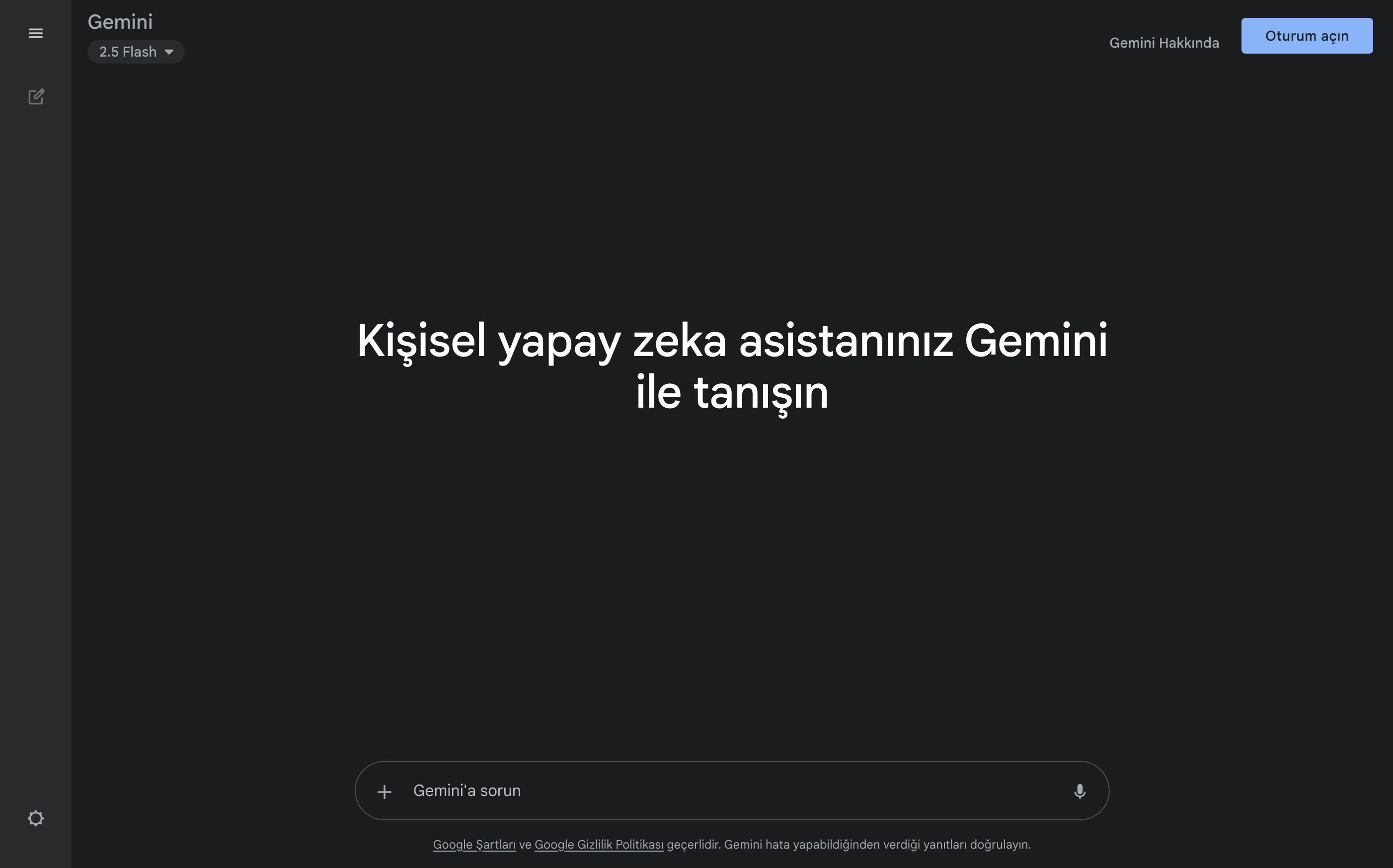
Figure 2. Gemini Interface and Prompt Home Page
3.3. Writesonic (GPT 3.5/4)
Writesonic is an AI-based platform that offers versatile and integrated solutions for digital media content production [38]. Combining content creation, search engine optimization, and digital marketing processes within a single system, the platform provides comprehensive tools specifically for content creators and marketing professionals. The platform offers high efficiency in various tasks, such as channel-specific content creation for social media (Instagram, LinkedIn, YouTube, TikTok, Twitter, etc.), writing product descriptions and promotional text, and creating website copy and landing page content [39]. Furthermore, its support for bulk content production significantly contributes to time savings.
Writesonic supports users not only in text production but also in content strategy and operational planning. Features such as real-time data analysis, competitor content analysis, content gap detection, automatic on- and off-page audits for search engine optimization, and internal link restructuring facilitate strategic decisions in the digital media production process.
For corporate use, Writesonic: SOC 2 Type II offers configurations compliant with regulations such as GDPR and HIPAA, ensuring data security with AES-256 encryption and TLS 1.3 protocols [38]. Furthermore, customizable data retention policies and a zero-data retention policy for AI training demonstrate an approach that prioritizes content security and privacy for enterprise customers. Figure 3 shows the relevant program's prompt login page.
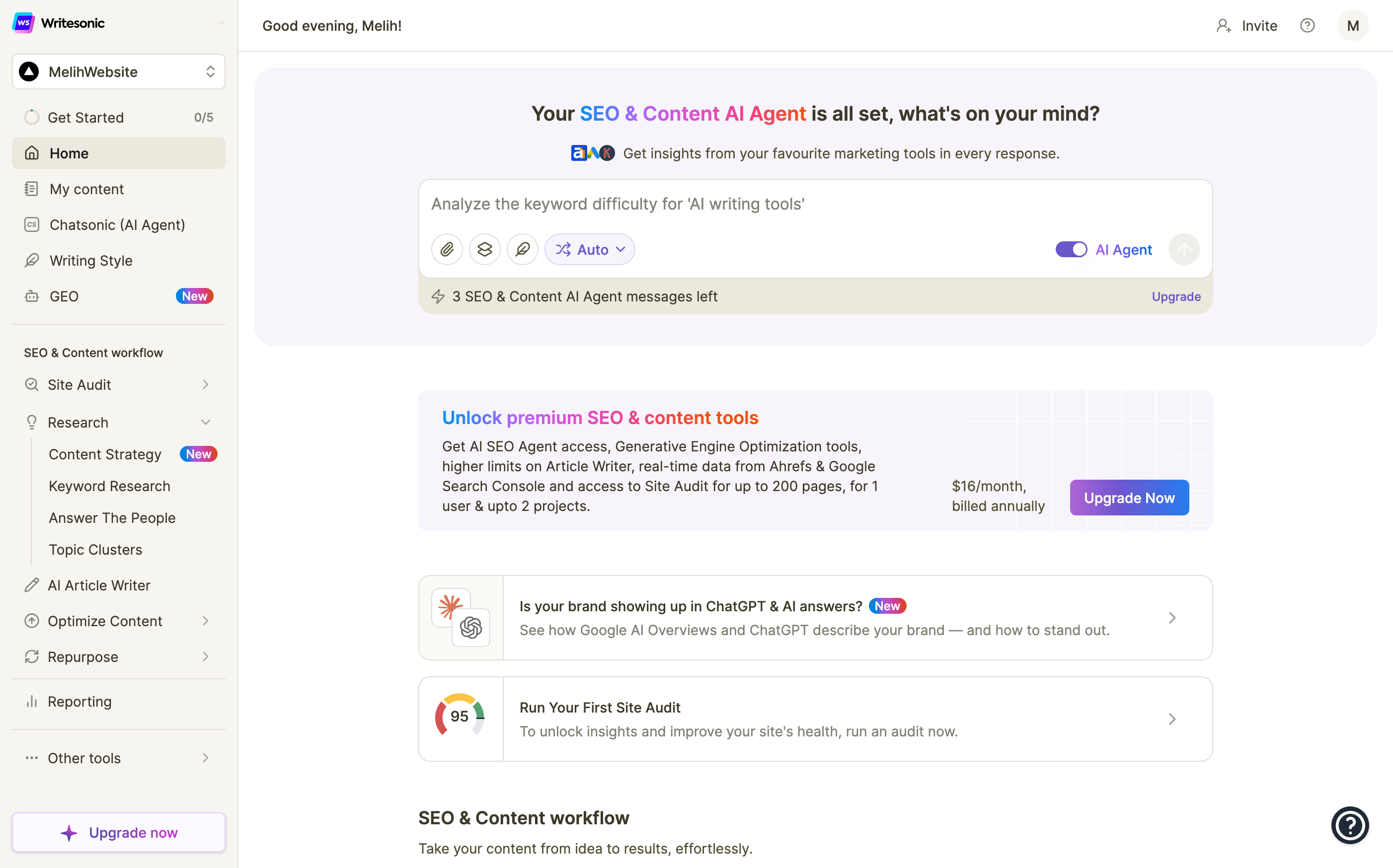
Figure 3. Writesonic Interface and Prompt Login Page
3.4. Bing Image Creator (DALL-E 3, OpenAI)
Bing Image Creator is an AI-powered production tool developed by Microsoft that can transform text-based prompts into visual content [40]. It offers significant advantages in digital media content production by accelerating the creative process and increasing operational efficiency.
The platform allows users to create high-quality visuals based on written descriptions. Its ability to produce realistic, surreal, or stylized visuals in a variety of artistic styles enables the rapid and effective visualization of conceptual ideas, product designs, and marketing materials. Furthermore, its ability to recognize complex scenes and compositions and produce aesthetically pleasing results has made Bing Image Creator a preferred tool in the creative industries. Figure 4 shows the program's prompt home page.
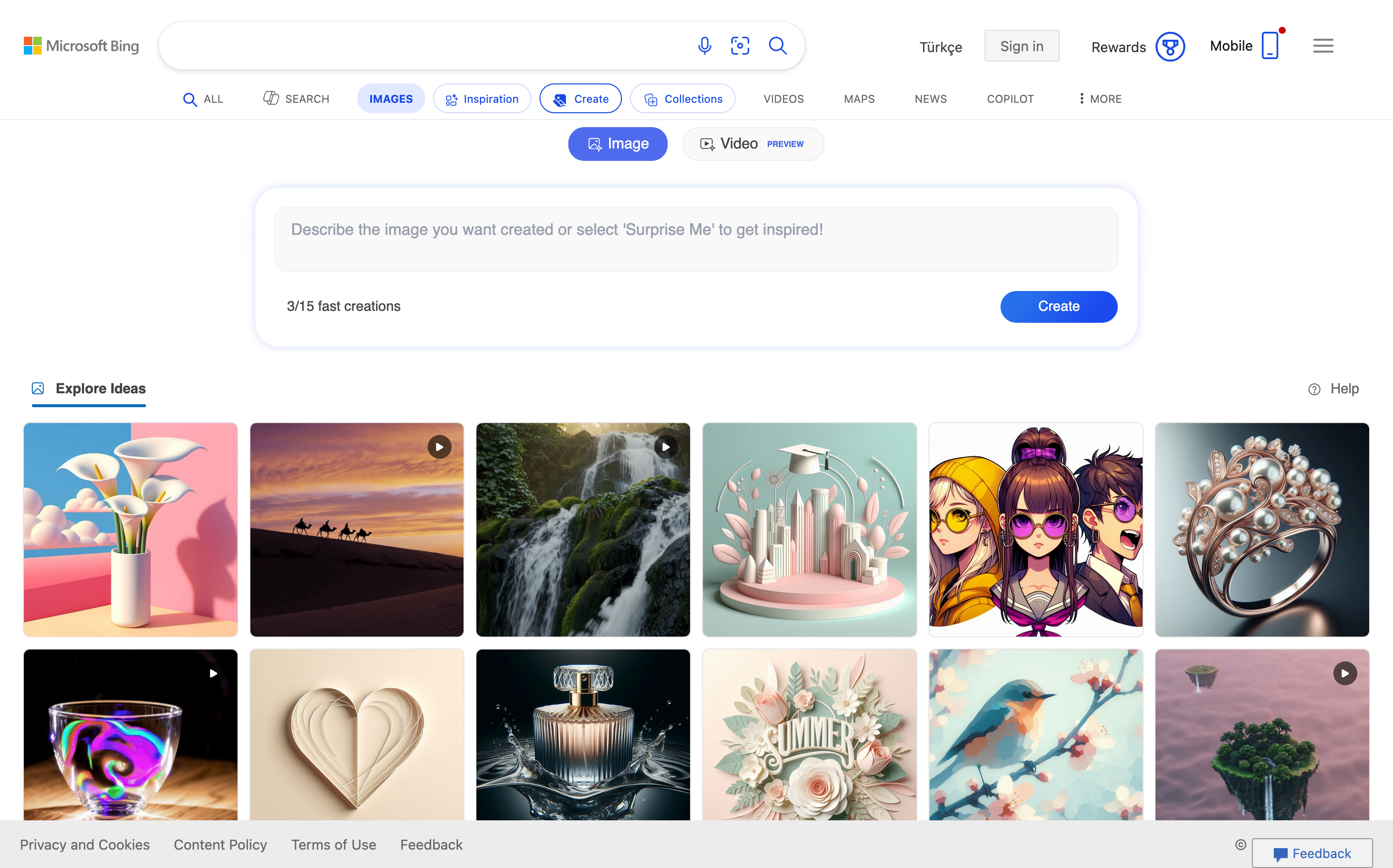
Figure 4. Bing Image Creator Interface and Prompt Login Page
3.5. Adobe Firefly (Adobe LLM)
Adobe Firefly is an AI-powered visual production platform developed by Adobe that enables creative content creation using text-based scripts. Offering comprehensive creative tools for digital media content creators and integrated with Adobe's robust ecosystem, this platform transforms content production processes [41].
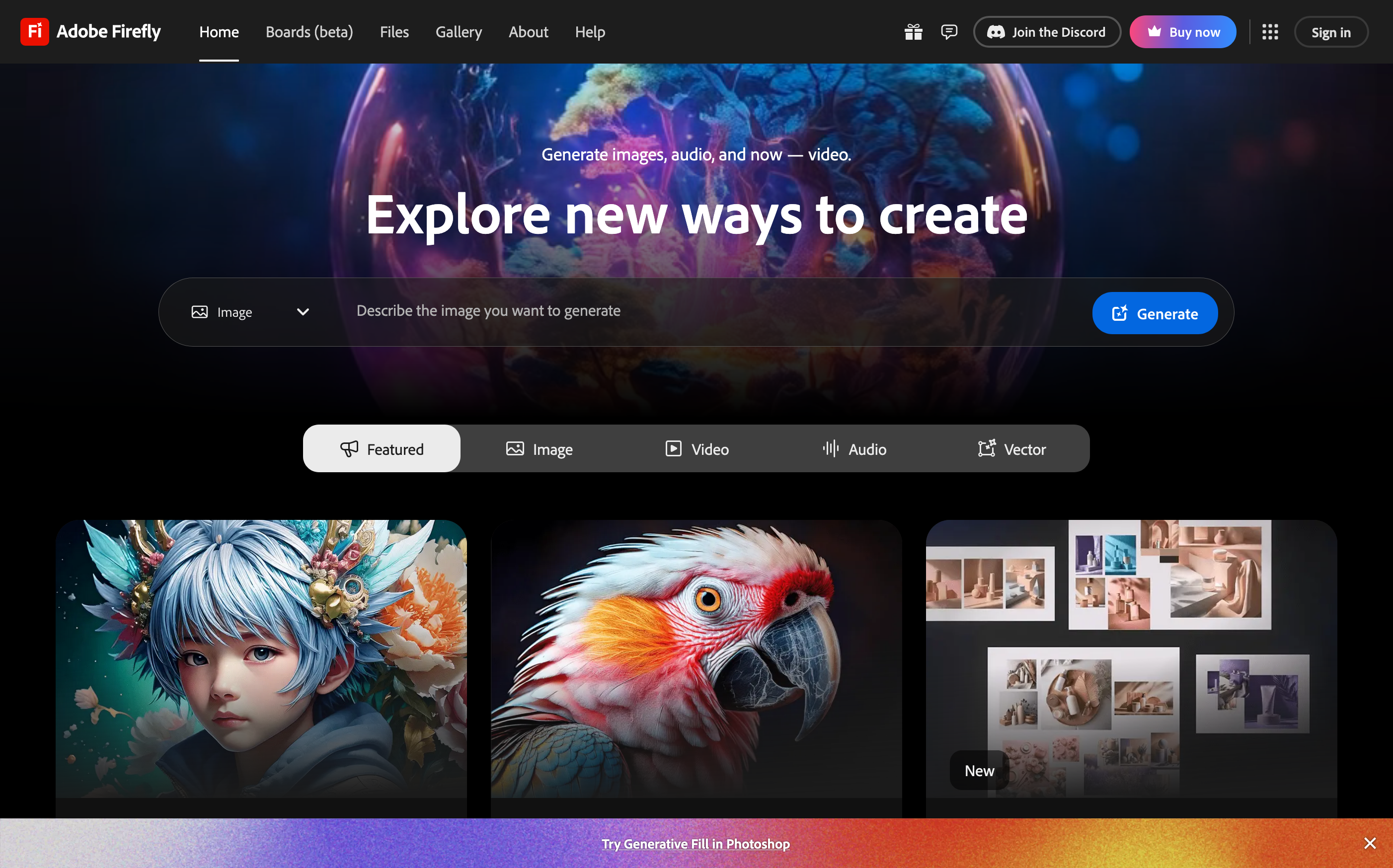
Figure 5. Adobe Firefly Interface and Prompt Home Page
Adobe Firefly's capabilities include creating visual content in various styles from text scripts, editing existing images, adding, removing, or modifying elements, creating eye-catching text designs and adding visual appeal to digital content, applying themes and color variations to vector images, creating video content from text scripts or images, translating audio and video clips into different languages while preserving the original voice and tone, and rapidly prototyping and visualizing design ideas [42]. Additionally, it offers features that optimize operational processes, such as quickly creating social media content, brochures, and more with Adobe Express integration, rapid theme and color testing of vector images with Adobe Illustrator integration, and rapid theme and color testing of vector images with Adobe Illustrator integration. In terms of Enterprise Solutions, AI-first enterprise solutions enable businesses to scale content production, facilitating the production of content aligned with corporate brands and accelerating large-scale content production projects [41]. Figure 5 shows the prompt login page for the relevant program.
3.6. Synthesia (LLM-Powered Assistant)
Synthesia, an AI-powered video production platform, is significantly transforming digital media content production processes [43]. Its ability to transform text-based scripts into professional-looking videos makes video production both democratizing and accessible to a wider range of users by reducing the need for technical knowledge. In this respect, it offers a powerful solution for digital content creators who want to produce video content in environments that don't require professional equipment or technical expertise.

Figure 6. Synthesia Interface and Prompt Login Screen
The platform's key features include AI-powered video production in over 120 languages, the creation of personalized narrations with over 125 AI avatar options, natural voice synthesis through text-to-speech conversion, the ability to develop custom enterprise-level avatars, fast and flexible content creation using predefined templates, and visual harmonization with customizable backgrounds and visual elements. All these capabilities enable the creation of professional-level content without requiring coding or video editing knowledge. This significantly increases operational efficiency and content production speed in areas such as corporate communications, multilingual marketing strategies, and educational digital media production. Figure 6 shows the prompt login page for the relevant program.
3.7. Runway ML (Gen-2 video AI + LLM Integration)
Runway ML is a leading platform in the field of AI-powered creative content production, providing advanced technologies for video and visual production that are transforming digital media production processes. Its system architecture, which works with generative AI models, offers content creators, designers, and marketing professionals’ tools that simplify and automate creative processes.
Among the platform's core capabilities are high-quality visual and text production using advanced generative models such as StyleGAN and BigGAN; video processing operations such as background removal, motion tracking, and AI-powered video editing; and “image-to-video” technology that converts static images into videos. Runway's Gen-4 model, the latest generation of AI-powered video and visual production technology, achieves high success in tasks such as generating scenes from text and creating dynamic content from visuals. This allows users to develop professional content from text or visuals without the need for advanced technical knowledge [44, 45].
In addition, Runway ML offers operational solutions that accelerate the content production process and support customization. The pre-trained model library on the platform provides AI models that can be used immediately for a wide variety of tasks, such as image synthesis, object detection, and segmentation. Users can also customize the content production process to their own needs with options such as custom model training and personalized data set usage. Integration with professional editing software such as Adobe Premiere Pro and After Effects enables creative workflows to be managed in a holistic manner. Additionally, API access provided for Gen-4 image and video models enables the platform to integrate with third-party software. The prompt input page of the relevant program is shown in the Figure 7.
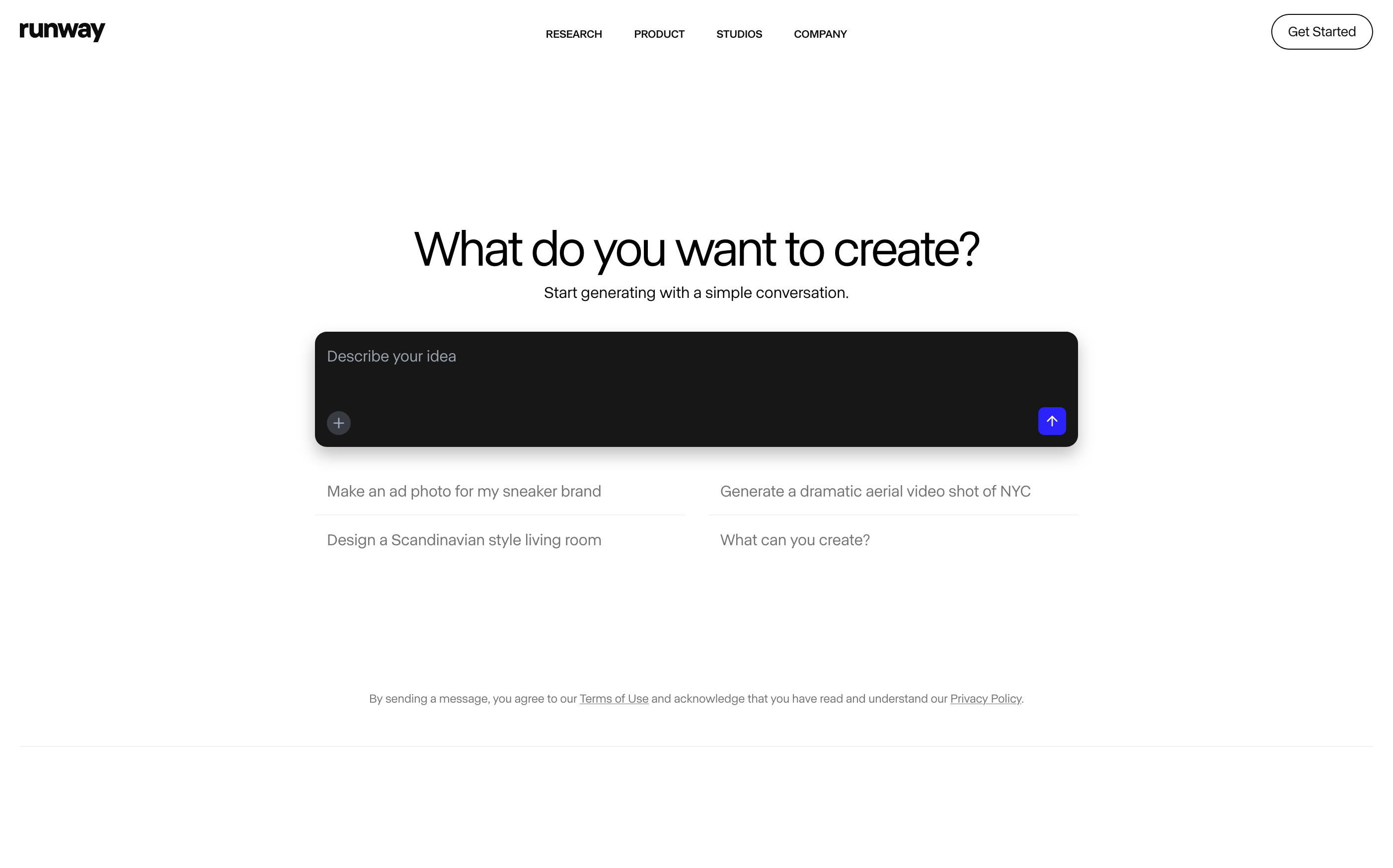
Figure 7. Runway ML Interface and Prompt Input Screen
3.8. ElevenLabs
ElevenLabs is a comprehensive AI-powered voice production platform designed for developers, content creators, and enterprise users. The platform stands out for its advanced technologies, particularly in the field of natural and realistic voice synthesis [46].
Key features include voice command-based task management, over 120 custom voices for 29 languages and 50 accents, and MCP-supported API connections that enable integration with various applications. In terms of security, enterprise-level protection mechanisms such as tool approval processes, fine-tuned access controls, and secure API key management are provided through the MCP (Model Control Protocol) infrastructure [47].
Thanks to these features, ElevenLabs is effectively used in application areas such as multilingual and personalized voiceovers for digital media content, scalable production of audio narration content, and localization of corporate communication materials. The prompt entry page of the relevant program is shown in the Figure 8.
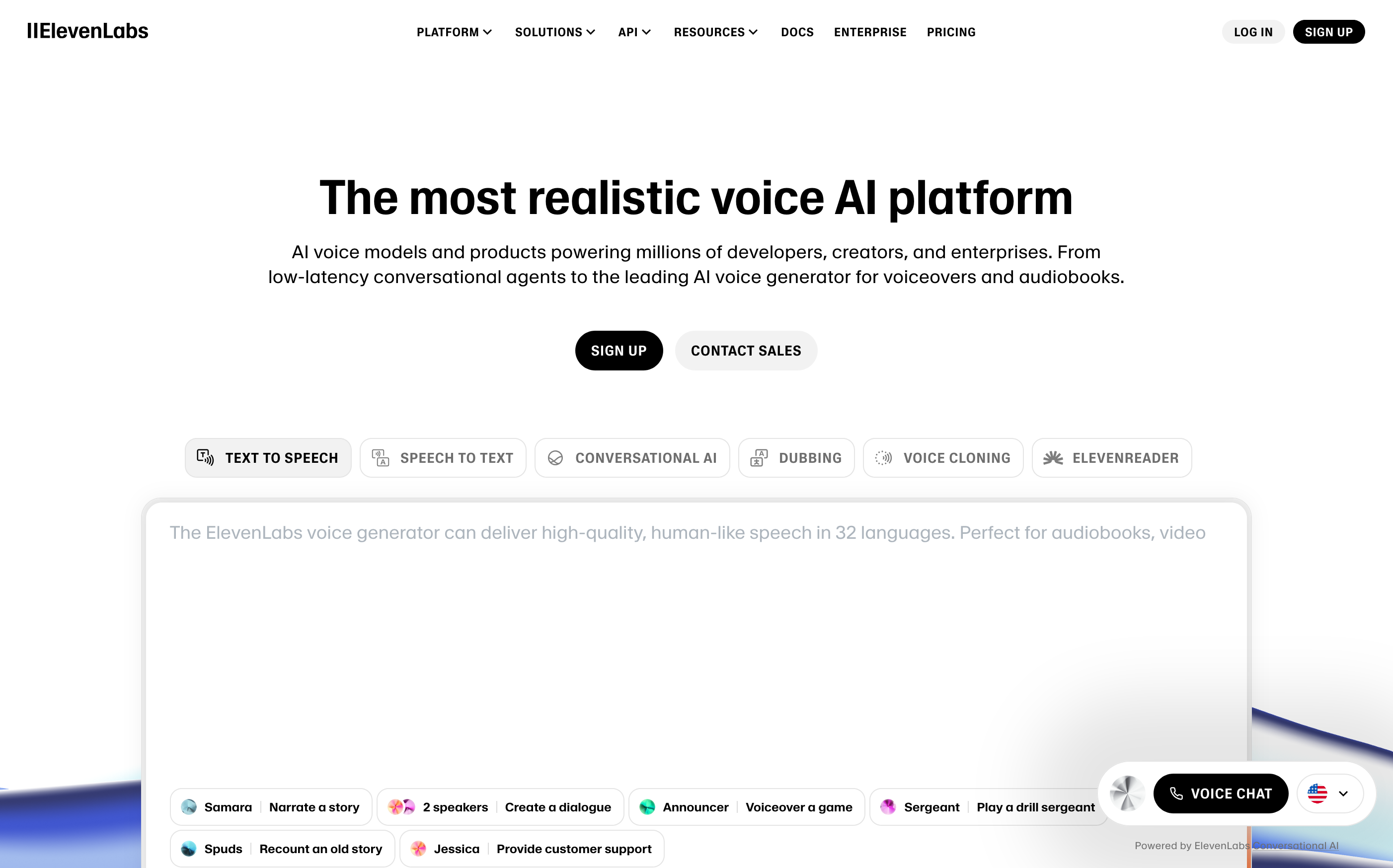
Figure 8. ElevenLabs Interface and Prompt Input Screen
3.9. Ocoya (GPT-3-Based Text Generation)
Ocoya is an AI-powered integrated social media management platform developed to optimize the processes of planning, producing, and scheduling digital media content across multiple platforms. The platform offers versatile solutions that save time and resources for content creators, marketing teams, and small to medium-sized businesses [48].
Its key features include GPT-3-based automatic text generation, social media platform-specific post recommendations, planning and scheduling tools, cross-platform simultaneous publishing support, and brand-compliant content recommendations. Additionally, the system's built-in visual design tools eliminate the need for users to rely on external graphic editing software during content creation [49].
In terms of operational efficiency, Ocoya enables more strategic execution of social media campaigns with features such as post analysis, performance tracking, determining the optimal sharing times, and task management integrated into the content calendar. This comprehensive feature set enables digital media professionals to manage the entire process from content creation to distribution from a central point, significantly simplifying the automation of social media marketing. The prompt login page of the relevant program is shown in the Figure 9.

Figure 9. Ocoya Interface and Content Creation Screen
3.10. Lately.ai (NLP/LLM Supported Content Summarization)
Lately.ai is an advanced artificial intelligence platform that uses natural language processing (NLP) and large language model (LLM) technologies to convert long-form content into short, effective, and platform-specific social media posts. It offers high added value in terms of content repurposing, particularly in corporate communications, content marketing, and digital media strategies [50].
The platform's core function is to extract meaningful contexts from sources such as blog posts, podcast transcripts, videos, or long-form corporate content, and transform this content into short, effective, and high-engagement-potential posts that align with social media standards [51]. In this process, Lately.ai's language modeling algorithms analyze syntactic structures and content context to produce short text variations that preserve the meaning density of the text and are consistent with the style of the target platform.
Lately.ai also has the ability to learn from past campaign data to model user-specific writing styles, brand voice, and message tone, ensuring that content appears consistent and aligned with corporate language, rather than simply being the product of artificial intelligence. Operationally, the platform offers an integrated structure for social media content calendars, supporting the sustainability of digital content strategies with features such as scheduling, categorization, and performance metrics evaluation. It is an effective solution for processes such as accelerating content production, maintaining productivity in repetitive content, and managing multi-channel content consumption. Figure 10 shows the prompt entry page of the relevant program.
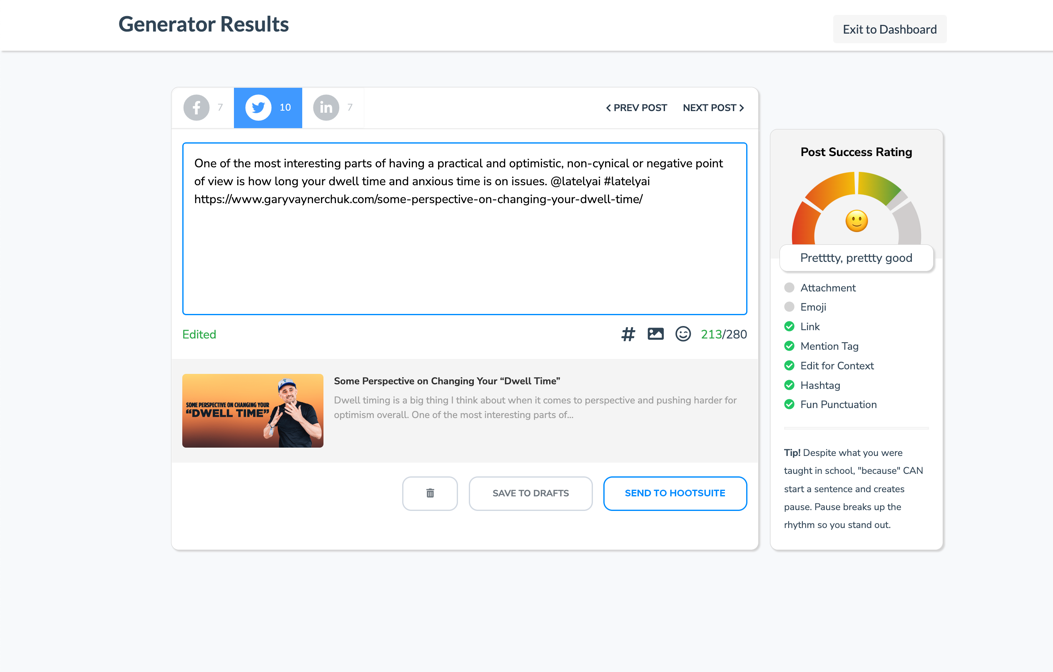
Figure 10. Lately.ai Interface and Prompt Entry Screen
4. How Language Models Are Transforming the Digital Media Industry
The world is undergoing a major transformation. Developments in the information and communication sector, or in other words, the IT sector, network technologies, and computers have undergone a development and transformation that would have been difficult to imagine in the 1960s and 1970s [52]. Technology, which aims to respond to social needs and economic challenges, is at the center of significant transformations in business applications and organizational structures. As a result, embracing digitalization and digital transformation has become indispensable for organizations striving to navigate the complexities of today's environment [53]. At this point, societies are obliged to adapt quickly to existing technological developments and to adapt their societies to these technologies. At this point, artificial intelligence has also created a deep impact on digital transformation in digital media. Digital transformation has increased the speed of information sharing and dissemination, while artificial intelligence, especially generative artificial intelligence, has increased the production of synthetic media content and reduced its costs. Since content produced with artificial intelligence support is of a certain quality, its credibility is also high [4]. Therefore, the existing transformation also poses a risk to societies, causing them to be more sensitive about the accuracy of the information and digital media content produced. Under this section, the following topics are discussed in order: the impact of generative artificial intelligence on human resource competence in the media sector, the deepfake effect of generative artificial intelligence in the media sector, and the ethical, economic, and social dimensions of generative artificial intelligence.
4.1. The Impact of Generative Artificial Intelligence on Human Resource Competence in the Media Sector
The dizzying developments in information and communication technologies are shaping not only their own sector but all sectors, and may give rise to new approaches and new sectors every day. While new professions are emerging in areas we did not even mention decades ago, new technologies have led to the emergence of new sectors or fields of work. Some professions, however, have faded into the annals of history [54]. This situation could significantly transform the digital media sector and the human resources working within it. The ability of generative artificial intelligence to generate data from existing data and create media content that is either fictional or realistic will transform many sectors, including cinema, sound, and music. Many videos that once required a budget of millions of dollars can now be produced in minutes or hours using the content creators mentioned above.
Of course, the fundamental reason for this productivity is that the changes and transformations in deep learning technology have taken productive artificial intelligence to a whole new level. In deep learning systems, higher-level features are derived from lower-level features, thereby creating a hierarchical representation model and enabling the development of representations at different levels related to the abstraction of data [55]. Therefore, the rise of artificial intelligence will lead to changes in the roles of those working in the media sector. On the one hand, artificial intelligence-based technologies can automate repetitive and time-consuming tasks in the media industry. For example, tasks such as text writing, data analysis, or content publishing can be delegated to artificial intelligence. On the other hand, artificial intelligence tools can enhance human skills and offer opportunities for collaboration in areas such as content creation, video editing, or graphic design. Media professionals can use artificial intelligence tools to produce more innovative and impressive content. Furthermore, artificial intelligence can play an important role in media ethics and content quality [5]. Therefore, it is strongly recommended that departments related to digital media and communication technologies include more artificial intelligence-related course content in their curricula.
In addition, the rapid increase in content production using artificial intelligence may seem to diminish the importance of human producers at first glance, but it is believed that it will make human-produced content more valuable [2]. Therefore, being able to create original and especially artistic content and having access to such human resources will become important for organizations. This will also lead to an increased demand for individuals with such skills in the industry.
In addition, development in the field of artificial intelligence requires significant capital investment, particularly due to the need for hardware infrastructure with high processing power. This situation has transformed the artificial intelligence race from a technological competition into a new global power struggle conducted through graphics processing unit technologies. Within the technological competition environment formed by the techno-feudal structure, NVIDIA has risen to a monopoly position with its dominance in the graphics processing unit market. This dominance has placed the company in a position more powerful than many nation states and transformed it into a supra-state authority over the global artificial intelligence market [56]. The concept of techno-feudalism refers to the fact that changes in the capital accumulation process, particularly with the dominance of monopolized technology platforms, exhibit feudal tendencies. Giant platforms such as Amazon, Facebook, and Google control users and small businesses in a manner similar to feudal lords [57]. At this point, it is considered highly beneficial for nations to be more sensitive to the services and offerings of such international artificial intelligence companies and to pursue their own national artificial intelligence research and development efforts.
4.2. The Impact of Generative Artificial Intelligence on Deepfakes in the Media Industry
The term “deepfake” was first used in 2017 when a group of Reddit users created fake videos using artificial intelligence technology [58]. The term “deepfake” is used to describe synthetic media such as images, music, and videos created using generative artificial intelligence tools, which are techniques based on multi-layered neural networks trained on machine learning and large data sets [59]. To understand how deepfakes work, it is first necessary to understand the “deep learning” system, which has been frequently discussed in recent years in relation to generative artificial intelligence, known as the third wave of artificial intelligence. Deep learning is an artificial intelligence method that teaches computer systems to perform tasks inspired by the human brain, using multi-layered artificial neural networks in areas such as object recognition, speech, and natural language processing, and is one of the varieties of machine learning [12]. According to Kırık & Özkoçak [5], Deepfake is a combination of the terms “deep learning” and “fake.” Using Deepfake, anyone can alter or mask another person's face in an image or video. News and content produced with deepfake technologies can be used for malicious purposes, ranging from disinformation campaigns to interference in countries' internal affairs, interference in elections, blackmail, bullying, harassment, non-consensual pornography, deception, fraud, and financial fraud. Digital media often facilitates this situation [13].
Artificial intelligence-based deepfake technology, which utilizes deep learning and generative artificial intelligence technologies, enables the creation of “fake text, fake audio, fake videos, and fake photos that can appear strikingly real and realistic at first glance.” Deepfake methods, which use the same underlying technique as multi-layered neural networks and large data sets, are often used to produce malicious, disinformation, and manipulative content. With these technologies, you can take an existing video and place a person's photo on the main character's face, or alter someone's voice to say or do things that are not true and have never been done [13, 60]. This situation has the potential to cause serious problems on both an individual and societal level.
Artificial intelligence technologies offer us opportunities to prevent existing deepfake methods, in addition to the risks they pose. At this point, systems that enable the analysis of large amounts of data are critical and important tools for us. Thanks to artificial intelligence technologies and technologies that enable more effective big data analysis, data can now be analyzed much faster [9, 23]. This provides a significant advantage in terms of data analysis. It is now possible to process large data sets quickly and access important information [5].
Face analysis tools (e.g., FaceForensics++, Deepware Scanner) and voice analysis tools (e.g., DeepFake Detection in Audio, Resemble.ai) can be used to detect deepfake content. In addition, physical inconsistencies and synchronization errors in video and media content are important clues for detecting deepfake content. Furthermore, the digital signatures of files, i.e., their digital creation dates and identifying information, are another critical and valuable clue for us to distinguish deepfake videos. It can be a reliable way to verify the first recording of a video and preserve its authenticity. Here, authenticity can also be ensured with blockchain technology. The possibilities offered by blockchain technology can also be a critical technology for us to get rid of deepfakes [61, 62]. In addition to all this, individuals can make an assessment of reality with their own observations and perceptions. The most popular deepfake tools include: FakeApp (primarily used to create deepfake content but can also be used in detection processes), Sensity AI (can be considered a deepfake detection tool), and InVID (a video analysis tool that can detect manipulation and deepfake content in videos).
4.3. Discussing the Ethical, Economic, and Social Dimensions of Generative Artificial Intelligence
In the traditional sense, fake content has always existed and will continue to exist, but the production of content intended to deceive people has reached a dangerous level, with fake content bombardments that are very difficult to distinguish from the real thing thanks to technology. At this point, the vulnerabilities in our public sphere and communication platforms are emerging as a result of the exponential advancement of generative artificial intelligence [4]. Deep fake technologies based on deep learning are developing rapidly. This technology enables the creation of malicious face-manipulated videos, posing a threat to social stability and personal privacy with its rapid spread. The role and impact of artificial intelligence in the media sector are the subject of serious debate [5].
The Generative Adversarial Network system acts as both a generator that creates images and a discriminator that determines whether the generated images are real or fake. In this sense, the problem actually contains its own solution. Similar to the approach of developing antivirus software against computer viruses, programs aimed at detecting deepfake applications are creating increasingly effective discriminators, thereby enabling more effective detection of synthetic text, photos, images, audio, music, and video content produced by deepfake technologies. Examples of such programs include FaceForensics++, Microsoft Video Authenticator, Detector - Deepfake Detection Challenge (DFDC), Sensity AI, and Deepware Scanner. Through these programs, inconsistencies and manipulations in video or image files can be detected [63].
The value of the artificial intelligence market in the media and entertainment sector is estimated to reach 19.78 billion US dollars by 2024. The artificial intelligence market in the media and entertainment sector is expected to have a compound annual growth rate of 22.56% between 2025 and 2033 and reach a value of US$123.46 billion by 2033 [64]. The main drivers of growth in the artificial intelligence market in this sector can be listed as follows: personalization of content, high-resolution graphics production, widespread use of visual effects applications, and integration of augmented reality and virtual reality technologies into production processes. Research shows that the use of artificial intelligence tools is increasing, especially in these areas [65]. Among the key factors driving the market are the increasing demand for personalized content, advancements in machine learning and natural language processing, which enhance production efficiency and content quality. AI-powered tools for digital rights management and anti-piracy protect intellectual property. Key players in the AI sector of the media and entertainment market include Amazon Web Services Inc. (Amazon.com Inc.), EVS Broadcast Equipment SA, Gravity Media, GrayMeta Inc., Hudl, International Business Machines Corporation, LMG LLC (Entertainment Technology Partners), Move.ai., Pixellot, PlaySight Interactive Ltd., Spiideo AB, Veritone Inc., etc. [64].
The year 2023 has been recorded as a period in which the industry produced more models than academia in the AI model development process. In particular, the training costs for pioneering models such as OpenAI's GPT-4 and Google's Gemini Ultra have reached millions of dollars. OpenAI spent $78 million to train GPT-4, while Google spent $191 million on Gemini Ultra [66].
Facebook is investing in artificial intelligence applications that detect misinformation. Microsoft is using artificial intelligence to develop reliable algorithms and potentially applying them to detect fake news. Another online service, TinEye (see https://tineye.com/), helps verify whether photos are real or manipulated by applying reverse engineering and scanning search engines. Given that fake news is unlikely to be detected and analyzed quickly enough by humans, it is certain that artificial intelligence technology will become crucial in detecting and identifying it [67]. One of the most malicious uses of deepfake is to exploit world leaders and politicians with fake videos, which can sometimes pose a major risk to world peace. Fake videos have been produced for nearly all world leaders, including Barack Obama, Trump, and Angela Merkel. Deepfake technology is also widely used in art, the film industry, and social media [68].
5. Conclusion and Recommendations
The digital media sector has undergone a tremendous transformation in recent years due to advances in artificial intelligence technologies and, more recently, developments in generative artificial intelligence technologies under the umbrella of deep learning. Today, texts, images, and video content that used to take weeks or months to produce can now be created in minutes or hours using various artificial intelligence tools. This highlights the profound impact of artificial intelligence on the sector's transformation. The media sector is likely to be one of the sectors most affected by generative artificial intelligence technology, both now and in the future. Of course, the way generative artificial intelligence works can lead to many problems, such as ethical issues, intellectual property, the place of human labor in the sector, misleading content, and deepfakes. In addition, these developments highlight the need to update digital media education curricula, as it is now clear that digital media must be evaluated in conjunction with artificial intelligence. Of course, skills that require creativity and expertise will retain their importance today and even become stronger.
Generative artificial intelligence is not something to be feared or avoided. On the contrary, it represents a technological infrastructure that must be established as a fundamental necessity for every nation, alongside major global powers, and for which national strategies must be developed. If technology is misused or misdirected, it can lead to serious social and economic disasters. Therefore, it is very important to establish a careful control and regulation mechanism while taking advantage of the potential of productive artificial intelligence. Because, as in the examples of the Arab Spring on social media, the information that institutions producing data for the world with productive artificial intelligence will present to societies may be out of control. This situation can also transform national values and taboos. It can create cultural effects. On the other hand, when properly directed, productive artificial intelligence can have great potential and improve the quality of life of societies. However, in order to use this technology responsibly, ethical rules must be established, economic policies must be reshaped, and social inequalities must be reduced.
6. Declarations
Acknowledgement
Not applicable
Funding
This research received no specific grant from any funding agency in the public, commercial, or not-for-profit sectors.
Authors` Contributions
Conflict of Interest
The authors certify that there is no conflict of interest with any financial organization regarding the material discussed in the chapter.
Data Availability
This review is entirely dependent on previously published literature and does not incorporate any novel datasets. All data that support the findings of this study are available within the cited articles and publicly accessible databases. All images and pictures used are public images or screenshots of the public webpages.
Ethics Approval
No need for ethical committee approval.
Declaration of AI Usage
AI-assisted tools were employed in this study for minor tasks such as grammar correction, language refinement, and proofreading. These tools were used transparently and in a manner that does not compromise the authors’ intellectual contribution. The authors affirm that all substantive content reflects original thought and upholds academic integrity.
References
[1] Özdem, K. (2022). Üretken Yapay Zeka Modellerinin Dijital Dönüşümdeki Yeri Ve Önemi. In M. Yılmaz, M. Ali Akcayok (Eds), Yeni Nesil Teknolojiler Işığında Yapay Zekâ ve Dijital Dönüşüm, Ankara: Nobel Akademik Yayıncılık.[2] Fırat, F. (2025). Yapay zeka çağında yeni medyanın dönüşümü: Deniz Yengin ile söyleşi. Yeni Medya, (18), 515-520.
[3] Özer, C. S. (2024). Dijital izlerde# yapayzekâ: Yapay zekâ algılarının ağ analizi. NOSYON: Uluslararası Toplum ve Kültür Çalışmaları Dergisi, (13), 19-34.
[4] Varan, G. (2025). Hakikat Sonrası Uçurumda Yön Bulmak: Sentetik Medya ve Yapay Zekanın İkili Kullanım İkilemi. Yeni Medya, (18), 522-529.
[5] Kırık, A. M., & Özkoçak, V. (2023). Medya Ve İletişim Bağlaminda Yapay Zekâ Tarihi Ve Teknolojisi: Chatgpt Ve Deepfake İle Gelen Dijital Dönüşüm. Karadeniz Uluslararası Bilimsel Dergi, (58), 73-99. https://doi.org/10.17498/kdeniz.1308471
[6] Çaha, Ö. (2020). Yeni Medya ve Değişen Toplumsal Hareketler. In M. Şeker, Y. Bulduklu, C. Korkut, M. Doğrul (Eds), Bilişim Teknolojileri ve İletişim: Birey ve Toplum Güvenliği. Ankara: Türkiye Bilimler Akademisi.
[7] Kaya Erdem, B. (2021). Yapay Zekânın Medya ve Yayıncılık Alanına Etkisi. TRT Akademi, 13(6), 897-903. https://doi.org/10.37679/trta.1002525
[8] Öztemel, E. (2020). Yapay zekâ ve insanlığın geleceği. In M. Şeker, Y. Bulduklu, C. Korkut, M. Doğrul (Eds), Bilişim Teknolojileri ve İletişim: Birey ve Toplum Güvenliği. Ankara: Türkiye Bilimler Akademisi.
[9] Damar, M. (2024). Sağlık Sektöründe Karar Destek Araçları: İş Zekâsı, Makine Öğrenmesi, Derin Öğrenme ve Yapay Zeka Uygulamaları. İzmir Sosyal Bilimler Dergisi, 6(2), 90-115. https://doi.org/10.47899/ijss.1591168
[10] Schmidt, A. (2020). Interactive human centered artificial intelligence: a definition and research challenges. In Proceedings of the 2020 International Conference on Advanced Visual Interfaces (pp. 1-4). Aricle:3, 1-4. September 28- 2 October 2020. Salerno, Italy.
[11] Bushara, M. A., Abdou, A. H., Hassan, T. H., Sobaih, A. E. E., Albohnayh, A. S. M., Alshammari, W. G., ... & Elsaied, M. A. (2023). Power of social media marketing: how perceived value mediates the impact on restaurant followers’ purchase intention, willingness to pay a premium price, and E-WoM?. Sustainability, 15(6), 5331. https://doi.org/10.3390/su15065331
[12] Yılmaz, A. & Kaya, U. (2022). Derin Öğrenme. 4. Baskı. İstanbul: Kodlab Yayın Dağıtım Yazılım Ltd.
[13] Eşitti, Ş. (2024). Yapay Zekâ, Deepfake (Derin Düzmece) Ve Dezenformasyon Çağinda Gazetecilik. In Ş. Eşitti, S. Çoban (Eds), Yapay Zekâ Çağında Medya, Kültür Ve İletişim Üzerine Güncel Araştırmalar. Çanakale: Paradigma Akademi Yayınları.
[14] Sucu, İ., & Ataman, E. (2020). Dijital Evrenin Yeni Dünyası Olarak Yapay Zeka Ve Her Filmi Üzerine Bir Çalışma. Yeni Medya Elektronik Dergisi, 4(1), 40-52.
[15] Damar, M., Özen, A., Çakmak, Ü. E., Özoğuz, E., & Erenay, F. S. (2024a). Super AI, generative AI, narrow AI and chatbots: An assessment of artificial intelligence technologies for the public sector and public administration. Journal of AI, 8(1), 83-106. https://doi.org/10.61969/jai.1512906
[16] Okay, S. (2023). Dijital Pazarlamada Yapay Zeka Ve Makine Öğrenimi Kullanımı. Elektronik Sosyal Bilimler Dergisi, 22(85), 135-142. https://doi.org/10.17755/esosder.1152771
[17] Prasad, G. (2024). Reaching the Unreached: The Role of Social Media in Empowering Women in The Bay Islands. Current Research Journal of History, 5(10), 6-12.
[18] Maheshwari, C. (2023). Music recommendation on spotify using deep learning. arXiv preprint arXiv:2312.10079. https://doi.org/10.48550/arXiv.2312.10079
[19] Bulut, S. (2020). Dijital Çağda Medya: Makine Öğrenmesi, Algoritmik Habercilik Ve Gazetecilikte İşlevsiz İnsan Sorunsalı. Selçuk İletişim, 13(1), 294-313.
[20] Summerville, A., Snodgrass, S., Guzdial, M., Holmgård, C., Hoover, A. K., Isaksen, A., ... & Togelius, J. (2018). Procedural content generation via machine learning (PCGML). IEEE Transactions on Games, 10(3), 257-270. https://doi.org/10.1109/TG.2018.2846639
[21] Ami, R. (2021). AI in Automated Content Moderation on Social Media. International Journal of Artificial Intelligence and Machine Learning, 4(3), 763-770. https://itaimle.com/index.php/ijaiml/article/view/249
[22] Babatope, A. (2024). Machine Learning for Advanced Fraud Detection and Content Moderation. Preprints.org: https://doi.org/10.20944/preprints202411.0352.v1
[23] Damar, M., & Özen, A. (2023). Sayıştay Denetiminde Akıllı Raporlama: Büyük Veri ve İş Zekâsı Teknolojisi. In M. Önder, & H.Ö. Köse (Eds.), Kamu Yönetiminin Denetimi: Temel Paradigmalar, Değişim ve Yeni Yönelişler, (ss.247-270). Ankara: Sayıştay.
[24] Damar, M., Özdağoğlu, G., & Özdağoğlu, A. (2018). İş Zekasını ve İlgili Teknolojileri Konu Alan Araştırmalara Küresel Ölçekte Bilimetrik Bakış. Bilgi Ekonomisi ve Yönetimi Dergisi, 13(2), 197-217.
[25] Damar, M. (2021). Endüstri 4.0 Çağında Yükseköğretim Kurulumları İçin Tedarik Zinciri Yönetiminde Bir İş Zekâsı Karar Destek Sistemi Uygulaması. İzmir Sosyal Bilimler Dergisi, 3(2), 144-158. https://doi.org/10.47899/ijss.20213204
[26] Damar, M., & Karaman, D. (2021). Açık Veri ve İş Zekâsı Teknolojisi: İstanbul Büyükşehir Belediyesi Dava Verileri Üzerine Bir Değerlendirme. Mehmet Akif Ersoy Üniversitesi Uygulamalı Bilimler Dergisi, 5(2), 206-228. https://doi.org/10.31200/makuubd.899741
[27] Damar, M, Özdağoğlu, G., & Saso, L. (2022). Designing a business intelligence-based monitoring platform for evaluating research collaborations within university networks: the case of UNICA - the Network of Universities from the Capitals of Europe. Information Research, 27(4), paper 945. https://doi.org/10.47989/irpaper945
[28] Chen, M., Mao, S., & Liu, Y. (2014). Big data: A survey. Mobile networks and applications, 19, 171-209. https://doi.org/10.1007/s11036-013-0489-0
[29] Cibaroğlu, M. O., & Yalçınkaya, B. (2019). Belge ve arşiv yönetimi süreçlerinde büyük veri analitiği ve yapay zekâ uygulamaları. Bilgi Yönetimi, 2(1), 44-58. https://doi.org/10.33721/by.570634
[30] Mediafy, (2024). Dijitalleşme Sürecinde Yapay Zeka ve Otomasyonun Rolü. Mediafy.com.tr. https://www.mediafy.com.tr/blog/dijitallesme-surecinde-yapay-zeka-ve-otomasyonun-rolu
[31] Caner, S., & Bhatti, F. (2020). A conceptual framework on defining businesses strategy for artificial intelligence. Contemporary Management Research, 16(3), 175-206. https://doi.org/10.7903/cmr.19970
[32] OpenAI. (2025). ChatGPT. https://chatgpt.com/
[33] Fui-Hoon Nah, F., Zheng, R., Cai, J., Siau, K., & Chen, L. (2023). Generative AI and ChatGPT: Applications, challenges, and AI-human collaboration. Journal of information technology case and application research, 25(3), 277-304. https://doi.org/10.1080/15228053.2023.2233814
[34] Google DeepMind. (2025). Gemini. https://gemini.google.com/app
[35] Aydin, Ö., Karaarslan, E., Erenay, F. S., & Bacanin, N. (2025). Generative AI in Academic Writing: A Comparison of DeepSeek, Qwen, ChatGPT, Gemini, Llama, Mistral, and Gemma. arXiv preprint arXiv:2503.04765. https://doi.org/10.48550/arXiv.2503.04765
[36] Aydın, Ö., & Karaarslan, E. (2022). OpenAI ChatGPT generated literature review: Digital twin in healthcare. In Ö. Aydın (Ed.), Emerging Computer Technologies 2, 22-31. Izmir: Izmir Akademi Dernegi.
[37] Aydın, Ö. (2023). Google Bard Generated Literature Review: Metaverse. Journal of AI, 7(1), 1-14. https://doi.org/10.61969/jai.1311271
[38] Writesonic. (2025). Writesonic AI Writer. https://writesonic.com/
[39] Davis, A. (2025). Writesonic Review: Complete Breakdown of Writesonic & How It Works. Contentelect. https://www.contentellect.com/writesonic-review/
[40] Microsoft. (2025). Bing Image Creator. https://www.bing.com/images/create
[41] Adobe. (2025). Adobe Firefly. The ultimate creative AI solution. Adobe Firefly. https://www.adobe.com/in/products/firefly.html
[42] Steiner, C. (2025). Our Honest Review of Adobe Firefly: Adobe’s Free Generative AI. Designerly https://designerly.com/adobe-firefly/
[43] Synthesia. (2025). AI Video Generator. https://www.synthesia.io/
[44] Runway. (2025). Runway ML. https://runwayml.com/
[45] Monica, (2025) Runway AI: Powerful video generation, but is it right for you? Our 2025 review delivers the verdict. https://monica.im/blog/runway-ai-review/
[46] ElevenLabs. (2025). The most realistic voice AI platform. Voice AI. https://elevenlabs.io/
[47] White, (2024). ElevenLabs Review: Why Is It So Popular? https://www.brafton.com/blog/ai/elevenlabs-review/
[48] Ocoya. (2025). AI Social Media Tool. https://www.ocoya.com/
[49] Firebear Studio, (2025). We make your life easier with Improved Import. https://firebearstudio.com/
[50] Lately.ai. (2025). Lately.ai. https://www.lately.ai/
[51] Goenka, U.(2025). Lately Review: Brutally Honest Analysis – Don’t Buy Before Reading This. https://autoposting.ai/lately-review/
[52] Damar, M. (2022). Dijital Dünyanın Dünü, Bugünü Ve Yarını: Bilişim Sektörünün Gelişimi Üzerine Değerlendirme. Nevşehir Hacı Bektaş Veli Üniversitesi SBE Dergisi, 12(Dijitalleşme), 51-76. https://doi.org/10.30783/nevsosbilen.1121818
[53] Damar, M., Köse, H. Ö., Cagle, M. N., & Özen, A. (2024). Mapping the Digital Frontier: Bibliometric and Machine Learning Insights into Public Administration Transformation. Sayıştay Dergisi, (132), 9-41. https://doi.org/10.52836/sayistay.1455036
[54] Damar, M. (2022). Dijital çağda bilişim sektörünün ihtiyacı olan yetkinlikler üzerine bir değerlendirme. Journal of Information Systems and Management Research, 4(1), 25-40.
[55] Şeker, A., Diri, B., & Balık, H. H. (2017). Derin öğrenme yöntemleri ve uygulamaları hakkında bir inceleme. Gazi Mühendislik Bilimleri Dergisi, 3(3), 47-64.
[56] Williams, R. T. (2024). The Relationship Between Social Media and Pedagogy. England: Cambridge Scholars Publishing.
[57] Karanfil, İ., & Efe, E. (2025). Türkiye’de Esnaf Kurye Modeli ve Direniş: Trendyol’a Bağlı Kuryelerin İş Bırakma Eylemleri. Emek Araştırma Dergisi, 16(27), 25-52.
[58] Maddocks, S. (2020). ‘A Deepfake Porn Plot Intended to Silence Me’: exploring continuities between pornographic and ‘political’deep fakes. Porn Studies, 7(4), 415-423. http://dx.doi.org/10.1080/23268743.2020.1757499
[59] Lundberg, E., & Mozelius, P. (2024). The potential effects of deepfakes on news media and entertainment. AI & Society, 40, 2159-2170. http://dx.doi.org/10.1007/s00146-024-02072-1
[60] Karnouskos, S. (2020). Artificial intelligence in digital media: The era of deepfakes. IEEE Transactions on Technology and Society, 1(3), 138-147. https://doi.org/10.1109/TTS.2020.3001312
[61] Ozdagoglu, G., Damar, M., & Ozdagoglu, A. (2019). The State of the art in blockchain research (2013–2018): Scientometrics of the related papers in Web of Science and Scopus. Digital Business Strategies in Blockchain Ecosystems: Transformational Design and Future of Global Business, 569-599. http://dx.doi.org/10.1007/978-3-030-29739-8_27
[62] Alıcı, S., Damar, M., & Gökşen, Y. (2024). Blok zincir teknolojisine akademik yönden ne kadar hazırız: Türkiye adresli blok zincir konusundaki uluslararası yayınların analizi ve alanın gelişimine yönelik öneriler. Journal of Information Systems and Management Research, 6(1), 40-62. https://doi.org/10.59940/jismar.1483935
[63] Helmus, T. C. (2022). Artificial intelligence, deepfakes, and disinformation. Rand Corporation, 1-24. https://www.rand.org/content/dam/rand/pubs/perspectives/PEA1000/PEA1043-1/RAND_PEA1043-1.pdf
[64] IMARC, (2024). AI in Media & Entertainment Market Size, Share, Trends and Forecast by Solution, Application, and Region, 2025-2033. https://www.imarcgroup.com/ai-in-media-entertainment-market#:~:text=AI%20in%20Media%20%26%20Entertainment%20Market%20Size%20and%20Share%3A,22.56%25%20during%202025%2D2033.
[65] Kapır, B. (2025). Tekno-Feodalizm Perspektifinden Sinema Sektöründe Üretken Yapay Zekâ Teknolojisinin Analizi. Tykhe Sanat ve Tasarım Dergisi, 10(18), 257-285. https://doi.org/10.55004/tykhe.1605565
[66] Bozkurt, A. (2024). Stanford HAI Yapay Zekâ Raporu İncelemesi. Bilgi Yönetimi, 7(2), 445-457.
[67] Kaplan, A. (2020). Artificial intelligence, social media, and fake news: Is this the end of democracy. In A. Akkor Gül, Y. D. Ertürk, P. Elmer (Eds), Digital Transformation in Media & Society. İstanbul University Press. https://doi.org/10.26650/B/SS07.2020.013.09
[68] Mahmud, B. U., & Sharmin, A. (2021). Deep insights of deepfake technology: A review. arXiv preprint arXiv:2105.00192. https://doi.org/10.48550/arXiv.2105.00192
Author information
Authors and Affiliations
Corresponding author
Copyright information
CC-BY