

Abstract
Towards Agentic AI in Destination Management: The Jackson Hole Tourism Dashboard Case
Keywords
Agentic AI, Tourism, Destination Management, AI in Destination Management, Jackson Hole, Tourism Dashboard
1. Introduction
Tourism destinations are now managed under increasingly complex, multi-layered, volatile, and publicly scrutinized conditions. In previous years, destination management was often confined to promotion and visitor-attraction activities, while the need to continuously balance economic value creation, environmental protection, residents’ well-being, infrastructure capacity, and long-term resilience remained insufficiently foregrounded [1, 2]. The OECD report shows that artificial intelligence is not merely a tool for enhancing personalization or marketing performance in destinations; it can also support market intelligence, optimize visitor flows and traffic management through real-time data, and enable policy-making based on more timely and granular evidence [3, 4].
The transformation enabled by artificial intelligence is particularly significant because many destinations now face a structural mismatch between the accelerating pace of tourism conditions and the slower operation of conventional reporting systems. Periodic reports, static indicators, and fragmented datasets are often inadequate for understanding rapidly evolving pressures such as crowding, mobility, social sentiment, environmental stress, and seasonal fluctuations in demand [6]. As tourism destinations become more complex, dynamic, and multi-stakeholder systems, agentic AI offers a decision-support logic that can integrate diverse destination data, generate situational awareness, and support timely, human-supervised managerial responses. Destination management is therefore moving from retrospective reporting toward a more agile and evidence-based governance model that asks not only “what happened?” but also “what is happening, what may happen, and how should we intervene?”. In this respect, agentic AI offers an important decision-support logic for managing the delicate balance among economic benefits, environmental protection, visitor experience, and local quality of life in destinations.
The European Travel Commission (ETC) report states that AI-enabled tools can make tourism organizations smarter, more responsive, and more resilient by enabling the integration of multiple data streams, particularly in research and decision-making processes, and by supporting faster institutional responses [7]. One of the most illustrative examples of AI use in destination management is Jackson Hole, which reflects a shift from conventional destination marketing towards a destination-governance approach that prioritizes management and stewardship [8]. According to the Jackson Hole Travel & Tourism Board, the Sustainable Destination Management Plan was adopted on 26 January 2023, after an 18-month participatory process. This process included 12 working sessions with 50 local stakeholders, eight focus groups with more than 150 tourism leaders, and a tourism perception survey involving approximately 5,000 participants [9]. The public launch of the Jackson Hole Tourism Dashboard on 14 January 2025 further strengthened this transition. Based on 37 data sources and structured around 55 key performance indicators, the platform brings economic, environmental, and social indicators together in an interactive monitoring interface [9-12]. In this respect, the case provides a strong empirical basis for examining the transition from dashboard-based destination intelligence to more agentic management logics.
The purpose of this book chapter is to discuss, through the concept of agentic AI, how destination management can evolve in the age of artificial intelligence into a smarter, more integrated, adaptive, and decision-support-oriented structure. To this end, the chapter first explains the conceptual foundations of the transition from traditional AI to agentic AI. It then examines the core characteristics of agentic AI, its decision-support logic, and its significance for contemporary destination management. The following section discusses the need for intelligent destination management systems in relation to data, complexity, sustainability, stakeholder coordination, and real-time monitoring. The methodology section explains the qualitative, interpretive, and conceptual case-study design. The Jackson Hole Tourism Dashboard case is then analyzed in terms of sustainable destination management and multi-source data integration. Subsequent sections interpret the case through the lens of agentic AI and evaluate the dashboard’s functions of monitoring, data integration, situational awareness, adaptive response, and decision support. The discussion section addresses the theoretical and practical implications of the case, its governance and ethical dimensions, and the opportunities and risks of agentic AI for destinations. The conclusion outlines the chapter’s contribution to the literature, its limitations, and future research directions.
2. Conceptual Foundations of Agentic AI: From Traditional Artificial Intelligence to Agentic AI
Artificial intelligence has evolved from systems that perform narrowly defined analytical tasks towards more autonomous, goal-oriented architectures with capacities for action [13]. In its traditional form, AI is generally used to classify data, recognise patterns, make predictions, automate repetitive tasks, or support human decisions within predefined boundaries [14]. Such systems are valuable because they can process large volumes of data faster than humans; however, they often operate as task-oriented tools that depend on explicit prompts, structured inputs, and human intervention to interpret outputs [15]. The emergence of agentic AI represents a major break in this development trajectory. Agentic AI refers to artificial intelligence systems organized around agents or multi-agent architectures that possess autonomy, intentionality, and the capacity for goal-directed behavior [16].
The transition from traditional AI to agentic AI is not only a technological development but also a conceptual shift in how intelligence is organised and applied [16]. Whereas traditional AI generally produces an output in response to a specific input, agentic AI structures the process around perception, reasoning, planning, coordination, and action [16]. In this model, intelligence does not reside solely in a single algorithm; it emerges through the interaction of agents, data sources, tools, and feedback mechanisms. An agent may be understood as an autonomous entity that perceives its environment, evaluates information, makes decisions, and acts to achieve specific goals [17,18]. Multi-agent systems, in turn, are structures in which multiple agents cooperate, coordinate, and communicate to solve problems in distributed environments [18-20]. This transformation also changes the role of AI in organizational and operational contexts [18]. Traditional AI primarily supports analysis; agentic AI extends this capacity toward adaptive and goal-oriented action [19]. Traditional AI identifies patterns, whereas agentic AI may use these patterns to plan subsequent steps [19]. Traditional AI assists human decision makers, whereas agentic AI can coordinate tasks within defined boundaries, interact with other agents, and generate context-sensitive responses [20, 21].
Agentic systems can operate across multiple knowledge bases, coordinate with peer agents, interpret changing conditions, and support real-time, data-driven decisions [16]. Nevertheless, the concept of agentic AI must be used carefully. A single universal definition of the term has not yet emerged in the literature [22]. Therefore, agentic AI is best understood as a family of architectures and methods based on agent-based reasoning, multi-agent coordination, and distributed interaction [16,22]. Its performance and usefulness depend on context-specific design choices, data quality, the clarity of goals, the reliability of tools, and the level of human oversight embedded in the system. In this sense, the transition from traditional AI to agentic AI indicates a broader movement from prediction to action, from automation to autonomy, and from single-model intelligence to coordinated intelligent systems. While traditional AI mainly answers questions and supports decisions, agentic AI can perceive situations, organise tasks, coordinate actions, and adapt within defined boundaries [19]. Table 1 presents the differences between traditional AI and agentic AI. General AI mostly performs specific tasks such as classification, prediction, analysis, and content generation, whereas agentic AI is an approach that supports more complex and multi-step processes through autonomy, goal orientation, planning, memory, tool use, feedback, and adaptive decision-making capacities [14,16].
Table 1. Differences between Traditional AI and Agentic AI
Comparison dimension | General AI | Agentic AI |
Core logic | Processes a given input and performs tasks such as classification, prediction, analysis, content generation, or recommendation. | Perceives the environment/data to achieve a specific goal, makes plans, uses tools, executes action steps, and monitors outcomes. |
Mode of operation | Mostly reacts to user prompts, data inputs, or predefined models. | Builds a multi-step process toward a goal; creates subtasks, follows the process, and changes direction when necessary. |
Goal orientation | The goal is usually given by the user as a one-off task: “summarize,” “predict,” “classify,” or “write text.” | The goal is broader: “achieve this objective,” “solve this problem,” “manage this process,” or “proceed by checking the results.” |
Level of autonomy | Low or moderate; generally requires continuous human direction. | Higher; can plan and execute intermediate steps within boundaries defined by humans. However, it is not expected to be fully unsupervised. |
Decision-making capacity | Produces decision-support outputs; shows patterns, makes predictions, or lists alternatives. | Evaluates alternatives, prioritizes them, selects the next step, and produces action recommendations that move the decision process forward. |
Planning capacity | Generally operates with a single-step or limited task logic. | Decomposes a complex goal into subtasks, sequences them, monitors progress, and generates new steps according to completion status. |
Tool use | The model mostly works with its training data, existing datasets, or user inputs. | Can interact with databases, APIs, web tools, files, sensors, calendars, maps, calculation tools, or other software. |
Memory and context | Uses context in a limited way; long-term memory is weak or externally specified in many systems. | Can retain previous steps, earlier decisions, user preferences, or process outputs in memory and transfer them to subsequent decisions. |
Adaptability | Adapting to new conditions often requires retraining, new data, or human intervention. | Can update its strategy according to feedback, new data, or changing conditions. This is one of the distinctive features of agentic AI. |
Workflow management | Completes a specific task; end-to-end process management is limited. | Can establish an end-to-end workflow by linking data collection, analysis, planning, recommendation, control, and reconfiguration. |
Human role | Humans usually assign the task, interpret the output, and make the decision themselves. | Humans define goals, ethical boundaries, and approval points; the system produces decision support and action flows within these boundaries. |
Risks | Incorrect prediction, data bias, low explainability, and erroneous content generation. | In addition to these risks, incorrect tool use, goal drift, excessive autonomy, black-box decisions, accountability problems, and security risks may arise. |
Most appropriate use areas | Analysis, prediction, reporting, content generation, classification, summarisation, and recommender systems. | Complex, dynamic, multi-step, and coordination-intensive processes such as crisis management, smart cities, health care, finance, cybersecurity, operations management, and destination management. |
Action | “Processes data and produces an output.” | “Perceives, plans, uses tools, makes decisions, and follows the process to achieve a goal.” |
Source: Adapted by the author from [7,13,14,16,20].
2.1. What Is Agentic AI?
Agentic artificial intelligence is an AI approach composed of agents that perceive their environment, evaluate data, make decisions, and act on those decisions in order to achieve a specific goal [7,13,14,16,20]. Here, an agent is an intelligent unit capable of acting independently. It collects data, interprets the situation, compares options, selects the appropriate action, and monitors the outcome. In structures where multiple agents work together. The conceptual basis of agentic AI is rooted especially in the literature on multi-agent systems [7,13,14,16,20, 22]. Agentic AI is also closely related to the distributed AI approach [23].
One of the most important advantages of agentic AI is that it provides flexibility, scalability, and resilience. In multi-agent systems, agents can be added, removed, or reconfigured [22]. This enables the system to adapt more easily to changing task requirements and environmental conditions. A distributed architecture can prevent the collapse of the entire system in the face of partial system failures, because local decision-making, inter-agent collaboration, and task sharing support system continuity [23].
Another important dimension of agentic AI is its ability to support real-time decision-making in complex and dynamic contexts [24]. Agents can produce decisions based on specific knowledge bases and environmental inputs; when necessary, they can co-ordinate with other agents to reach more integrated outcomes. Therefore, agentic AI should be understood not merely as an analytical tool but as a system that supports and monitors decision processes and, when needed, provides intervention capacity in the face of changing conditions. Agentic AI represents the evolution of artificial intelligence from a passive tool for analysis or content generation towards autonomous, goal-oriented, distributed, and coordinated decision-support systems [15]. At the core of the concept lies the ability of agents to perceive the environment, make decisions according to goals, communicate with other agents, and solve complex problems in a distributed manner [16].
Table 2. Types of Artificial Intelligence and Core Functions
Type of artificial intelligence | Core function | Example |
Traditional AI | Performs classification, prediction, or analysis from specific data. | Demand forecasting, segmentation |
Generative AI | Generates text, images, code, summaries, or other content. | Report summary, campaign copy |
Agentic AI | Sets goals, plans, uses tools, makes decisions, and recommends or performs actions. | Monitoring crowding and producing an appropriate routing recommendation |
Source: Adapted by the author from [14,16].
2.2. How Is Agentic AI Developed?
Developing agentic AI requires designing artificial intelligence not merely as a system that responds to specific inputs, but as an autonomous structure capable of setting goals, perceiving its environment, interpreting data, making decisions, planning, and transforming these decisions into action [24]. The central element in this approach is the agent. An agent is an intelligent unit that receives information from its environment in line with a specific purpose, processes this information, evaluates alternatives, and selects an appropriate action. Developing agentic AI requires a seven-stage configuration.
Table 3. Core Characteristics of Agentic AI and Their Managerial Meaning
Core characteristic of agentic AI | Explanation | Managerial/functional meaning |
Autonomy | Once goals, tasks, or boundary conditions have been defined, the system can operate with a certain level of independence and determine the intermediate steps required to reach the goal. | Enables the system to sustain the task flow without waiting for direct human commands at every step. |
Goal-oriented behavior | Agentic AI works toward a specific purpose; it evaluates the information it obtains, selects relevant actions, and regulates its behavior according to the expected outcome. | Transforms AI from producing isolated outputs into a decision-support structure focused on goal achievement. |
Perception and context awareness | The system can receive structured data, documents, user input, digital signals, system status, or other contextual information and interpret them in relation to the task. | Ensures that decisions are produced not only from data but also by considering the context in which the data emerge. |
Reasoning and decision making | It can evaluate alternatives, identify constraints, prioritize actions, and select the next step. | Produces more flexible and meaningful decision support in complex situations where fixed rules are insufficient. |
Planning | It can divide complex tasks into smaller steps and decide what information is needed, which tool will be used, the sequence of tasks, and how success will be evaluated. | Supports the orderly, traceable, and goal-consistent execution of multi-stage processes. |
Tool use | It can interact with external tools, databases, software systems, APIs, search engines, calculation tools, documents, and digital environments. | Allows AI not only to generate text but also to connect with real systems and perform operations. |
Coordination and communication | In multi-agent structures, different agents can assume roles such as data collection, analysis, evaluation, planning, or monitoring and communicate with one another. | Enables complex problems to be solved through task sharing and inter-agent coordination rather than a single centralized mechanism. |
Adaptability and learning | It can adjust its behavior according to feedback, new data, or changing conditions, and update its route when earlier steps do not produce the expected outcome. | Allows the system to renew its decision and action logic according to changing environmental conditions. |
Scalability and flexibility | It can be expanded by adding new agents, tools, data sources, or decision rules. | Allows the system to adapt to different task areas, growing data volumes, and increasingly complex needs. |
Human oversight and control | Although it has autonomous features, it requires human-defined goals, ethical boundaries, and governance mechanisms. | Determines which actions will be automated, which decisions require human approval, and how accountability will be ensured. |
Source: Prepared by the author.
· Stage 1: The purpose that the system will serve must be clearly defined. This purpose determines which problem the system will solve, which decisions it will support, which data it will use, and within which boundaries it will operate. If the goal is not clearly defined, the agents’ capacity to produce decisions, prioritize, and select actions is weakened.
· Stage 2: Agent roles must be defined. Each agent assumes a specific function. One agent may collect data, another may conduct analysis, another may assess risk, and another may generate recommendations. In this way, the system decomposes a complex problem into more manageable components.
· Stage 3: Data sources and the knowledge infrastructure must be established. For agentic AI to make decisions, it must have access to reliable, up-to-date, and meaningful data. These data may come from structured databases, sensors, digital platforms, user inputs, texts, images, reports, or external systems.
· Stage 4: The tools that agents can use must be specified. Agentic AI systems are not merely analytical structures; when necessary, they perform operations by using digital tools. Database querying, calculation, reporting, file reading, web search, software-interface use, automatic notification generation, or initiating a specific workflow may be among these tools.
· Stage 5: The decision-action loop must be designed. In agentic AI systems, the process generally proceeds through the logic of perceiving the environment, interpreting data, evaluating options according to the goal, creating a plan, recommending or implementing action, monitoring the outcome, and revising the decision when necessary.
· Stage 6: Human oversight and ethical boundaries must be defined. Because agentic AI possesses autonomous decision and action capacity, it should not be operated without control, especially in high-impact domains. Which decisions the system can make automatically, which decisions require human approval, and under which conditions the system must be stopped should be defined in advance.
· Stage 7: The system must be tested through a small-scale pilot application. Agentic AI is generally not established at once as a large and complex system. First, a specific task or problem domain is selected; then agents’ performance, data quality, decision accuracy, tool use, and human oversight are tested.
The process of developing agentic AI is a holistic process that consists of defining goals, establishing agent roles, building the data infrastructure, structuring tool use, designing the decision-action loop, securing human oversight, and testing the system through a pilot application. This structure transforms artificial intelligence from a technology that merely produces outputs into an intelligent system that thinks in a goal-oriented manner, evaluates context, makes decisions among alternatives, and generates actions within defined boundaries. However, the effective and trustworthy operation of agentic AI depends on more than technical infrastructure. It also requires clear goals, high-quality data, defined task sharing, explainable decision processes, and ethical governance mechanisms that preserve human oversight. Understanding how agentic AI is developed therefore also requires grasping the core characteristics that distinguish these systems from other forms of AI. Table 3 presents the core characteristics of agentic AI: autonomy, goal orientation, context awareness, planning, tool use, adaptability, and human oversight.
2.3. Agentic AI and Intelligent Decision-Support Processes
Agentic AI is not only a technological architecture; it also represents a management logic that makes decision-support processes more context-sensitive and adaptive [24,25]. While traditional decision-support systems are limited to visualizing historical data, agentic AI shifts the focus from 'what outcome is expected' to identifying optimal intervention conditions. Thus, agentic AI moves decision support beyond static analysis towards a cycle of continuous monitoring, contextual reasoning, recommendation generation, and adaptation through feedback. In the literature, the main difference of agentic AI is explained through autonomy, goal orientation, planning, memory, tool use, and the capacity to adapt to changing conditions [14,16]. At the center of intelligent decision support with agentic AI lies the concept of the agent. An agent is an autonomous unit that receives information from its environment, processes it, makes decisions according to specific goals, and can initiate action. In multi-agent systems where several agents work together, decision support is no longer an output produced from a single center; it becomes a more distributed and coordinated structure through the sharing of tasks such as data collection, analysis, evaluation, planning, and recommendation generation [19]. Multi-agent systems therefore offer a stronger support mechanism in complex decision environments through distributed problem solving, coordination, communication, and flexible task sharing [17,18,20].
Agentic AI structures the decision-support process through five basic stages: perception, interpretation, planning, recommendation development, and feedback [25]. In the first stage, the system collects information from different data sources or perceives the current situation. In the second stage, it interprets this information by relating it to context. In the third stage, it evaluates possible options and develops a plan to achieve the goal. In the fourth stage, it presents prioritized recommendations to decision-makers or initiates action within defined boundaries. In the final stage, it monitors outcomes and updates the decision logic according to new data and feedback. This loop allows agentic AI to move beyond data processing and support decision-making as an adaptive and continuously updated process.
In complex and dynamic environments, agentic AI differs from fixed-rule or single-model systems by adjusting decision processes according to changing conditions, goals, and feedback. Unlike traditional AI, agentic AI systems can adapt to real-time context, optimise complex and long-term goals, and reorganize decision processes according to changing environmental conditions [16]. In this respect, agentic AI shifts decision support from the question “what outcome is expected?” to “under which condition, which step should be implemented, with which priority, and with what expected result?”
Agentic AI also differentiates itself in intelligent decision-support processes by using different data types and digital tools together [14]. Agentic AI systems can interact not only with structured datasets but also with texts, documents, sensor data, real-time data, user inputs, APIs, databases, and external software tools [19]. Compared with traditional AI, agentic AI systems can work with more dynamic and contextual inputs and produce multi-step plans, executable actions, and adaptive decision outputs [14]. This feature moves decision support beyond the level of producing analysis toward an action-oriented, tool-supported, and context-sensitive structure.
At the same time, in intelligent decision-support processes, agentic AI does not replace human decision-makers; rather, it creates a structure that strengthens their decision capacity [25]. Especially in high-impact decision domains, goals, ethical boundaries, approval mechanisms, and accountability rules must be defined by humans. Studies on multi-agent LLM systems show that these systems can make significant contributions to complex data processing and rapid analysis, yet human expertise remains central for strategic and long-term decisions [13,17]. Therefore, agentic AI should be evaluated as a hybrid decision system operating under human oversight. It supports decision-makers through data integration, reasoning, planning, recommendation generation, and adaptive monitoring.
Intelligent decision-support processes with agentic AI move artificial intelligence beyond being an assistant that only generates analysis or prediction and transform it into a goal-oriented, context-sensitive, multi-step, and action-supporting managerial tool. This approach provides decision-makers with opportunities to process information faster, evaluate broader data sources together, compare alternatives, identify risks early, and make more adaptive decisions according to changing conditions. However, for this potential to be used reliably, data quality, explainability, ethical boundaries, human approval, and institutional accountability mechanisms must be explicitly embedded in the decision-support process.
3. Destination Management
Destination management has entered a new period in which tourism can no longer be explained solely through promotion, marketing, and visitor-attraction activities [26]. Contemporary destinations are complex systems shaped by visitor mobility, environmental pressure, infrastructure capacity, resident well-being, digital reputation, and climate risks; therefore, destination management increasingly requires continuous monitoring, integrated data use, stakeholder coordination, and adaptive decision support [26,28]. Recent studies on smart tourism destinations show that destinations must be addressed together with technology, data, sustainability, experience management, and governance dimensions [29].
In the data age, destinations generate information from numerous sources, including accommodation systems, transportation flows, visitor surveys, mobile data, online reviews, social media, environmental indicators, public services, event calendars, and stakeholder feedback [26, 28]. The central issue is not the amount of data available, but whether these data can be transformed into meaningful managerial intelligence [28]. Fragmented data do not improve decision quality on their own; they need to be connected, interpreted in context, and transferred to decision processes at the right time [26]. The smart tourism destination literature emphasizes that technological infrastructure should be used not only to collect information but also to support destination decision making, experience management, sustainability, and local quality-of-life goals [28,30].
Complexity in destination management further complicates decision processes [27]. Tourism destinations are not linear systems; a decision taken in one area may produce unexpected consequences in others [27,31]. For example, a marketing campaign may increase visitor numbers, while simultaneously increasing traffic congestion, accommodation and housing pressure, the use of natural areas, resident discomfort, and environmental stress [27]. Recent studies on overtourism show that visitor density affects not only visitor experience but also residents’ quality of life, everyday practices, and the long-term sustainability of the destination [32]. Destination management must therefore evolve from a growth-oriented approach toward systems thinking, impact monitoring, and balance management [27,31].
This transformation also changes the meaning of destination competitiveness [26]. In the traditional understanding, competitiveness was often measured through visitor numbers, visibility, market share, and tourism revenues. Today, however, a successful destination is understood not simply as one that attracts more tourists, but as one that can manage growth intelligently [26,29]. In this new approach, competitiveness depends on the capacity to monitor carrying capacity, protect residents’ quality of life, sustain natural and cultural assets, distribute tourism benefits and costs more equitably, and respond to emerging risks in a timely manner [27,30,32]. Studies on smart tourism destinations indicate that technology-based development must be assessed together with sustainability, local quality of life, and the long-term resilience of the destination [29-32].
Data-driven destination management requires dynamic decision-support systems that complement periodic reports by detecting early-warning signals, identifying pressure points, supporting scenario comparison, and enabling timely intervention. At this point, intelligent destination management becomes not merely a matter of digitalization but a matter of restructuring data governance, institutional cooperation, sustainability, social representation, and decision-making capacity [13,29,31].
Destination management is shifting from a visitor-attraction logic toward a balanced governance approach that uses data, technology, and AI-supported decision systems to manage visitor mobility, local well-being, environmental capacity, and economic benefits together. Today, destinations are expected to generate economic value while also protecting environmental resources, sustaining residents’ quality of life, managing visitor experience, and responding rapidly to changing travel behavior [30]. Consequently, the main challenges in destination management center on managing visitor pressure and carrying capacity, balancing the economic benefits of tourism with local and environmental well-being, transforming fragmented data into decision support, and integrating sustainability, stakeholder coordination, and real-time monitoring [29,31]. Four major challenges stand out in destination management:
· Managing visitor pressure and carrying capacity.
· Balancing economic benefits with local and environmental well-being.
· Transforming fragmented data into adaptive decision support.
· Integrating sustainability, stakeholder coordination, and real-time monitoring.
3.1. From Fragmented Data to Intelligent Destination Governance
The increasing complexity of tourism destinations shows that destination management can no longer be conducted solely through marketing campaigns, visitor statistics, and periodic reports [33]. Destinations are dynamic systems composed of interrelated variables such as visitor mobility, accommodation demand, infrastructure capacity, environmental pressure, digital reputation, public services, climate risks, and stakeholder expectations [34]. Destination management is therefore evolving from systems that collect data but store them in disconnected ways toward intelligent management systems that integrate, interpret, and transfer different data flows into decision processes [33,34].
Fragmented destination data, dispersed across visitor surveys, transport records, accommodation statistics, environmental reports, social media, and stakeholder feedback, limit managers’ ability to understand the destination as an integrated system [3,4]. According to the OECD, AI has the potential to optimize visitor flows and traffic management in tourism through real-time data and automated decision-support mechanisms [4]. AI also supports sustainable tourism practices by improving resource use, reducing waste, balancing visitor flows, and distributing tourism benefits more fairly [19].
The need for intelligent destination management systems is also related to the changing meaning of destination competitiveness [7,19,33]. Competitiveness can no longer be measured only by visitor numbers, arrivals, or tourism revenue; the destination’s capacity to use data, coordinate stakeholders, monitor sustainability, detect risks early, and respond to changing conditions has also become an important component of competitiveness [33]. At this point, agentic AI adds a more advanced decision-support layer to intelligent destination management [14,16]. Whereas traditional digital systems mostly display, report, or visualize data, agentic AI can interpret data, coordinate analytical tasks, identify risks, compare options, and generate adaptive recommendations within human-defined boundaries [16]. The agentic AI literature shows that these systems differ from traditional AI applications through their autonomy, goal orientation, context adaptation, planning, memory, tool use, and capacity for multi-step decision execution [14,19,22-25]. A recent study on smart city management also demonstrates that multi-agent LLM systems have strong decision-support potential in routing complex urban queries, working with local knowledge and regulations, integrating different data sources, and accelerating human decision-making processes [13].
Intelligent destination management systems integrate fragmented data into a shared knowledge base that makes visitor pressure, environmental risks, and stakeholder priorities more visible for timely decision-making. The ETC notes that AI-enabled dashboards can combine live data sources such as mobility, traffic, reservation, and sentiment data, thereby helping tourism organizations detect changes quickly, improve coordination with local stakeholders, and conduct more proactive visitor management [7]. In this context, agentic-AI-supported intelligent destination management represents the transition from digital systems that merely display information toward more intelligent governance systems that perceive and interpret changing destination conditions, generate options, and provide adaptive decision support under human oversight [14,16].
This literature framework shows that agentic AI differs from traditional AI applications through its capacities for decision support, data integration, planning, tool use, and adaptive recommendation generation, while destination management is becoming an increasingly complex, multi-actor, data-intensive, and sustainability-oriented field of governance. However, the relationship between agentic AI and destination management has not yet been sufficiently conceptualized in the existing literature. In tourism studies, AI has mostly been addressed in relation to marketing, personalization, demand forecasting, content generation, or visitor experience, whereas the potential of agentic AI to monitor multi-source data, generate contextual awareness, interpret sustainability pressures, support stakeholder coordination, and develop adaptive decision processes in destinations has been discussed only to a limited extent. The main research problem of this study is therefore how the logic of agentic AI can be understood in destination management not merely as a technological innovation but as a new, data-driven, context-sensitive, human-supervised, and sustainability-oriented decision-support approach. Building on this gap, the study examines the Jackson Hole Tourism Dashboard case and aims to conceptually explain how existing intelligent destination management applications can provide an intermediary model in the transition towards agentic AI.
4. Methodology
This chapter adopts a qualitative, interpretive, and conceptual case-study methodology to examine the Jackson Hole Tourism Dashboard as an illustrative case of how data-driven destination intelligence may approximate an agentic AI logic in destination governance. Rather than treating the dashboard as a fully autonomous AI system, the analysis positions it as an empirical and conceptual case through which the monitoring, integration, interpretation, and decision-support capacities of contemporary destination management technologies can be assessed. The purpose of the study is to produce explanatory and conceptual insights into how intelligent destination management can be understood through the emerging logic of agentic AI. The methodological approach is based on document analysis of publicly available reports, dashboard-related materials, strategic planning documents, visitor survey findings, and institutional sources, which are interpreted through the theoretical lens of agentic AI. This design is appropriate because the chapter does not seek to measure causal effects; instead, it aims to develop an analytically grounded understanding of how multi-source data systems can support adaptive, evidence-based, and sustainability-oriented destination management. The study is positioned as interpretive research that examines publicly available evidence, institutional documents, and conceptual literature. Therefore, the chapter does not claim that the selected case represents all destinations; rather, it uses the case as an analytical lens to understand, at a deeper conceptual level, the relationship between destination management systems and agentic AI.
4.1. Case Study Approach
The case study approach is appropriate because the chapter examines a contemporary and complex phenomenon within its real-life context. Intelligent destination management systems cannot be fully understood as isolated technological tools; they are embedded in governance structures, sustainability priorities, stakeholder relations, data infrastructures, and institutional decision processes. A single-case design enables a focused analysis of how these elements interact in a specific and well-documented setting.
4.2. Case Selection: Why Jackson Hole?
Jackson Hole was selected because it offers a visible, well-documented, and sustainability-oriented example of contemporary destination management. The Jackson Hole Travel & Tourism Board frames its mission around responsible tourism, the protection of natural resources, community values, and sustainability. This makes the case meaningful for examining the shift from promotion-oriented destination management toward a stewardship- and governance-oriented approach. In addition, the Sustainable Destination Management Plan was developed as a five-year framework to move Teton County toward a sustainable future, and the online dashboard structure seeks to monitor tourism pressure through social, economic, and environmental indicators. These features make the case suitable for discussing intelligent and potentially agentic forms of decision support.
4.3. Data Sources and Document Analysis
The chapter is based on secondary and publicly available sources, including official webpages, institutional reports, destination-management documents, sectoral assessments, academic articles, and book chapters. The main documents include reports and materials produced by the Jackson Hole Travel & Tourism Board, documents related to the Sustainable Destination Management Plan, the WORTH Initiative annual report, visitor survey results, and the European Travel Commission’s report on artificial intelligence in tourism. The documents were examined through qualitative document analysis. The analysis focused on identifying recurring themes, institutional priorities, data practices, governance mechanisms, and decision-support functions.
4.4. Analytical Framework
The case was analyzed through five interrelated dimensions: data integration, decision support, governance, sustainability, and the degree of proximity to agentic AI. The data integration dimension examined how different information sources are brought together to understand tourism impacts. The decision-support dimension focused on how data are transformed into monitoring, evaluation, recommendation, or managerial action. The governance dimension assessed how institutions, stakeholders, and coordination mechanisms shape destination management. The sustainability dimension examined how the case links tourism management to environmental protection, resident well-being, visitor behaviour, and long-term destination resilience. Finally, the agentic AI dimension assessed the extent to which the case reflects characteristics associated with agentic systems, such as continuous monitoring, distributed intelligence, adaptive interpretation, goal-oriented decision support, and the transition from static reporting toward more autonomous and responsive management architectures.
5. The Jackson Hole Tourism Dashboard Case
Jackson Hole is a high-profile mountain and nature-based tourism destination located in Teton County, Wyoming, within the Greater Yellowstone ecosystem [9]. The destination’s tourism structure is shaped around outdoor recreation, national park visitation, wildlife observation, skiing, hiking, natural landscapes, cultural identity, and the symbolic value of wilderness [11]. Jackson Hole’s attractiveness is closely linked to its natural capital, public lands, and distinctive sense of place [9]. The vision of the Jackson Hole Travel & Tourism Board emphasizes the protection of natural capital and the enhancement of community well-being, while its mission treats tourism as an activity that is compatible with local values, contributes to the protection of natural resources, and is managed according to the principle of sustainability [12].
Tourism plays a central role in the economic structure of Teton County [9]. The 2022 fiscal year report of the Jackson Hole Travel & Tourism Board describes tourism as the “lifeblood” of Teton County and states that the sector supports accommodation providers, restaurants, tour operators, and other local businesses [11]. According to the report, Teton County hosted more than 1.6 million overnight visitors in 2021; these visitors generated USD 1.5 billion in spending and USD 96.5 million in state and local tax revenues [11]. The report also notes that tourism supported 7,740 jobs in Teton County, corresponding to 22.2% of total county employment [11]. These indicators show that tourism is not only a visitor economy in the region but also a critical development component in terms of public revenues, local services, employment, and infrastructure financing [9-11].
Jackson Hole can be evaluated as a sensitive destination management case because the destination’s core attractiveness depends on natural and public resources that are vulnerable to overuse. The tourism experience in the region is built upon pristine landscapes, wildlife, outdoor recreation, national parks, and authentic nature experiences. According to the Teton County visitor survey, 92% of visitors stated that they were “somewhat” or “very” satisfied with their Jackson Hole experience, and 91% reported that they were likely to return to the destination [11]. At the same time, the same survey shows that visitors perceived price, value for money, parking problems, accommodation costs, tourism’s impact on residents’ quality of life, and human impacts on wildlife as problem areas. These findings reveal that, despite high visitor satisfaction and strong destination appeal, tourism pressures in Jackson Hole create tensions that must be managed in relation to local life, accessibility, and environmental sensitivity [11].
The sensitivity of the destination is further intensified by year-round tourism intensity and seasonal visitation peaks [35]. The Teton County visitor survey states that the region experiences high levels of tourism throughout the year because it is a tourism and outdoor recreation destination [11]. The same report indicates that domestic and international tourism levels have increased in recent years and that visitor pressure became more pronounced especially in the period following the COVID-19 pandemic [11]. Concerns about the sustainability of tourism led stakeholders, residents, and representatives of the Jackson Hole Travel & Tourism Board to develop the Sustainable Destination Management Plan. The purpose of this plan is to shape the future of tourism in Teton County through five-year goals and to monitor the impacts of tourism on people and place more systematically.
Another important characteristic of Jackson Hole’s tourism structure is the strong relationship among visitors, residents, and public lands [36]. The destination must manage not only the visitor economy but also the impacts of tourism on infrastructure, transportation, public safety, recreation areas, wildlife, and local services. The Jackson Hole Travel & Tourism Board report states that a portion of lodging tax revenues is used for tourism promotion, visitor services, events, and educational materials [9]. The same report indicates that 60% of lodging tax revenues are allocated to the JHTTB and the remaining 40% to the Town of Jackson and Teton County. This fiscal structure shows that tourism management in Jackson Hole operates with a dual logic: on the one hand, tourism and visitor experience are supported; on the other, the impacts of tourism on public services and local infrastructure are intended to be managed [9].
For these reasons, Jackson Hole offers a strong and appropriate case for examining contemporary destination management [9,35-38]. The destination is economically dependent on tourism; however, this dependency creates a multidimensional problem area that must be managed together with the protection of natural resources, residents’ quality of life, visitor experience, infrastructure capacity, and impacts on wildlife [36]. The Jackson Hole Travel & Tourism Board’s approach to integrating marketing and management practices at the destination level shows that the destination is oriented not only toward attracting visitors but also toward evaluating the positive and negative impacts of tourism together [38]. In this context, Jackson Hole is an instructive case that makes visible the complex nature of contemporary destination management in relation to sustainability-oriented planning, stakeholder participation, visitor education, public-land use, and the need for data-driven monitoring [35-38].
The prominence of the sustainable destination approach in Jackson Hole stems from the fact that the destination’s tourism success also produces multidimensional pressures that must be managed. The region’s core appeal is based on natural landscapes, wildlife, outdoor recreation, national park experiences, and the perception of wilderness; the vision of the Jackson Hole Travel & Tourism Board explicitly emphasizes the protection of natural capital and the improvement of community well-being [12]. Therefore, tourism growth is not only an opportunity in terms of economic income, employment, and local business activity; it is also a strategic management issue that affects environmental sensitivities, public-land use, infrastructure capacity, visitor behaviour, and local quality of life. The JHTTB states that it focuses on assessing both the positive and negative impacts of tourism, increasing benefits while reducing drawbacks, and integrating marketing and management practices at the destination level [9].
The inclusion of local stakeholders has been decisive in strengthening the sustainable destination approach in Jackson Hole. The Sustainable Destination Management Plan was prepared to shape the future of tourism in Teton County through five-year goals and to monitor tourism’s impacts on people and place [11]. Visitor survey results show that visitors are generally highly satisfied with the Jackson Hole experience; however, they also identify price, accommodation costs, parking, tourism’s impact on residents’ quality of life, and human impacts on wildlife as important problem areas. These findings demonstrate that sustainable destination management in Jackson Hole is not only a matter of environmental protection, but a holistic governance approach that requires balancing economic benefits, visitor experience, resident well-being, public services, and the long-term protection of natural resources [9,11].
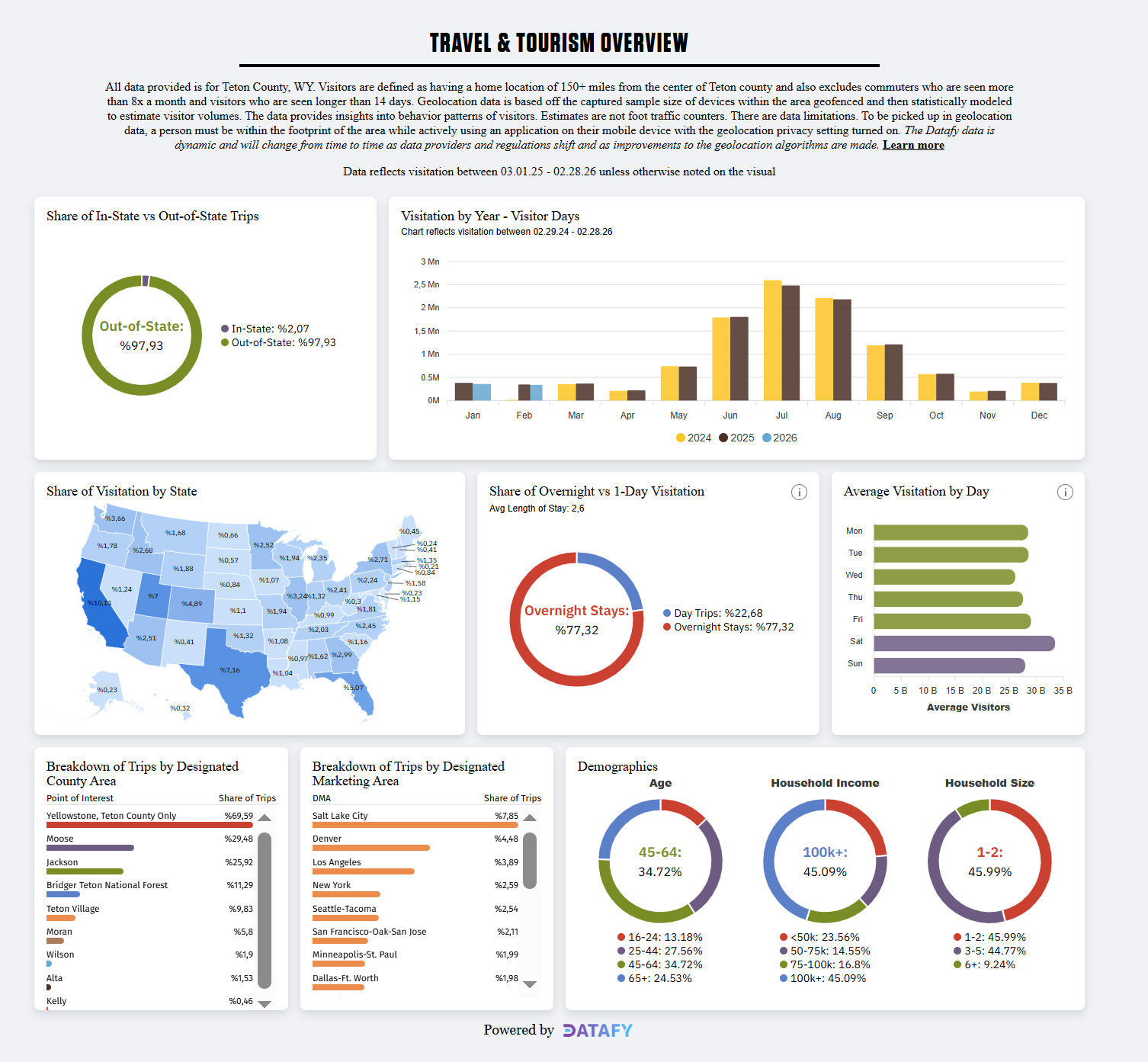
Figure 1. Jackson Hole Tourism Dashboard Screenshot
Source: Source: Jackson Hole Travel & Tourism Board, Tourism Data Dashboard [12]
The development of the Jackson Hole Tourism Dashboard emerged from the need to move destination management beyond fragmented reporting toward a more integrated, evidence-based, and continuously monitorable managerial structure. Jackson Hole’s tourism structure produces simultaneous management pressures, including high visitor demand, seasonal concentration, parking and mobility problems, wildlife sensitivity, concerns about residents’ quality of life, the need for responsible visitation, and the long-term protection of natural and cultural assets. For this reason, the dashboard was developed not merely as a promotional or statistical reporting tool but as a decision-support tool associated with the Sustainable Destination Management Plan, which aims to monitor the impacts of tourism on people, place, all lands, and all communities in Teton County. The WORTH Initiative annual report states that, in support of Teton County’s five-year Sustainable Destination Management Plan, social, economic, and environmental indicators were identified for tracking in an online community dashboard; 267 potential tourism-impact indicators were narrowed down to 43 confirmed indicators; and visitor surveys and stakeholder inputs supported this structure [11]. In this respect, the dashboard provides a shared evidence base for destination managers, the Jackson Hole Travel & Tourism Board, local government actors, tourism authorities, community groups, and other stakeholders involved in destination stewardship.
The managerial significance of the dashboard arises from its integration of economic, environmental, and social indicators within a single monitoring logic. The economic dimension makes visible accommodation, visitor demand, tourism expenditure, business activity, and tourism’s contribution to local revenues. The environmental dimension shows pressures on natural resources, wildlife, trails, public lands, and sensitive landscapes. The social dimension highlights residents’ quality of life, visitor behaviour, responsible visitation, community sentiment, and the relationship between tourism and local well-being. In traditional destination management, accommodation data, traffic data, visitor surveys, environmental information, and community feedback often remain dispersed across different institutions and reports, making it difficult for decision makers to see the full picture. By bringing these dispersed indicators into a single interface, the Jackson Hole Tourism Dashboard functions not as a passive system that simply stores data but as a managerial tool that supports monitoring, comparison, early signal detection, interpretation, and decision support. It also creates a common language among the DMO, local government, community groups, tourism businesses, and other stakeholders, thereby transforming data from a technical input into a governance coordination tool. Figure 1 shows how the dashboard is used as a strategic mechanism within destination governance infrastructure to organize the relationship among data, institutions, and action around sustainability, visitor management, and long-term destination resilience.
5.1. Evaluation of the Jackson Hole Tourism Dashboard in the Context of Agentic AI
The Jackson Hole Tourism Dashboard moves beyond descriptive reporting by transforming dispersed tourism data into a structured basis for managerial interpretation, prioritization, and action-oriented decision support.
The integration of different data streams such as accommodation, trail counters, traffic, wildlife incidents, and social sentiment within sustainability indicators shows that destination management is no longer limited to tracking statistics. Rather, it is moving toward a more integrated decision-support logic that jointly evaluates tourism pressure, environmental sensitivities, visitor behaviour, and community well-being. When individual indicators are evaluated separately, they carry limited meaning; when read together, however, these indicators enable destination managers to see more clearly the relationships among demand pressure, mobility stress, spatial concentration, ecological risk, and social perception.
When the dashboard is examined through the lens of agentic AI, its value lies not in replacing raw data with decisions but in strengthening management capacity by transforming data into meaningful signals. Accommodation data may reveal demand intensity, traffic data may show transportation and mobility pressure, trail counters may indicate spatial use in natural areas, wildlife incidents may make ecological sensitivity visible, and social sentiment data may reveal visitor and community perceptions. This structure helps managers assess which pressures are increasing, which areas require closer monitoring, and which interventions may be prioritized. The dashboard contributes to destination governance through three interrelated functions: integrating diverse data, interpreting destination conditions, and supporting action-oriented managerial priorities. In this respect, although the Jackson Hole Tourism Dashboard is not a fully autonomous agentic AI system, it provides a transitional structure that moves destination management from passive monitoring toward smarter, context-sensitive, and action-oriented decision support.
By integrating multiple data sources, the Jackson Hole Tourism Dashboard produces situational awareness that cannot be generated through any single indicator alone. Accommodation data can reflect demand intensity, traffic data can show mobility pressure, trail counters can indicate spatial concentration, wildlife incidents can reveal ecological sensitivity, and social sentiment data can reflect visitor or local community perceptions. When these indicators are assessed separately, they produce fragmented information; when interpreted together, they provide a more holistic understanding of the social, environmental, economic, and operational conditions of the destination. The dashboard’s structure, which links 37 data streams to 55 sustainability indicators, therefore enables decision makers to see tourism not only as an economic activity but also as a dynamic system of interrelated pressures, risks, and management priorities.
Situational awareness is the capacity to understand what is happening in a particular environment, why it matters, and what it may imply for future action. In destination management, this capacity means monitoring current conditions, identifying emerging pressures, seeing the relationships among different indicators, and supporting timely decisions. For example, an increase in accommodation demand may be interpreted by itself as a positive economic signal. However, if traffic congestion, trail crowding, wildlife incidents, or negative community sentiment also increase during the same period, this may point to broader destination pressure. Similarly, visitor satisfaction becomes more meaningful when interpreted together with price, parking opportunities, responsible visitation messages, and perceptions of sustainability. In this respect, the dashboard creates a shared view for local government, tourism authorities, community groups, and other stakeholders, enabling problems to be discussed on the basis of observed conditions rather than delayed assumptions. The Jackson Hole Tourism Dashboard therefore functions not only as an information system but also as a situational awareness platform that provides a common language, a shared evidence base, and coordination among stakeholders.
The Jackson Hole Tourism Dashboard goes beyond descriptive reporting by turning monitoring into a basis for intelligent decision support. The dashboard strengthens adaptive response capacity by helping managers detect emerging pressures earlier and reduce the gap between observation and managerial intervention. In traditional destination management, problems such as congestion, environmental degradation, visitor concentration, or resident dissatisfaction are often noticed when complaints increase, periodic reports are prepared, or impacts become visibly deeper. By contrast, a dashboard based on multiple indicators can monitor signals such as visitor demand, traffic, parking use, trail crowding, wildlife incidents, and community perception together, enabling managers to identify emerging pressures earlier. For instance, if visitor demand, trail use, and traffic indicators rise simultaneously, this can be interpreted as a spatial or seasonal concentration pressure. In such a case, more timely interventions may include strengthening visitor communication, reconfiguring responsible visitation messages, coordinating transportation options, directing visitors to less pressured areas, or preparing public services for peak periods.
The dashboard’s adaptive response capacity is also important for managing environmental and social pressures. In nature-based destinations, tourism impacts may emerge through wildlife disturbance, trail pressure, intensive use of public lands, irresponsible visitor behavior, and accumulated environmental stress in sensitive ecosystems. Dashboard-based monitoring can make visible where and when these pressures increase, thereby supporting more responsive environmental management. Similarly, tourism impacts are experienced not only at ecological or infrastructural levels but also through residents’ quality of life, the burden on public services, traffic, accessibility, price pressure, and trust in tourism governance. Adaptive response capacity therefore depends not only on technical data analysis but also on socially legitimate interpretation processes, inter-institutional cooperation, and stakeholder coordination. Nevertheless, the Jackson Hole Tourism Dashboard should not be regarded as a fully autonomous response system. The system makes pressures visible and offers decision makers the possibility of faster and more evidence-based evaluation; however, determining threshold values, assessing intervention options, managing conflicts of interest, approving decisions, and ensuring accountability remain the responsibility of human actors and institutional governance mechanisms. The dashboard should therefore be viewed not as fully agentic AI but as a transitional structure that brings destination management closer to more adaptive, context-sensitive, and action-oriented decision support.
5.2. Pre-Agentic Destination Management: The Potential and Limits of the Dashboard
The Jackson Hole Tourism Dashboard can be evaluated as a pre-agentic model located between traditional destination monitoring systems and agentic-AI-supported destination management. The available evidence does not show that the system sets goals on its own, independently selects interventions, or carries out management actions without human approval. It would therefore not be accurate to define the dashboard as a fully agentic AI system. However, the system clearly goes beyond static reporting by integrating multiple data sources, structuring indicators around management needs, making tourism pressures visible, and providing decision makers with contextual information. In this respect, the dashboard shows how destination management can evolve from retrospective data tracking toward an intelligent, context-sensitive, and decision-support-oriented governance logic.
The dashboard’s proximity to agentic AI is visible in its functions of monitoring, data integration, context generation, and preparing the ground for managerial action. By enabling indicators such as visitor volume, accommodation trends, traffic pressure, wildlife incidents, responsible visitation awareness, and resident concerns to be evaluated together, the system produces situational awareness. This structure approaches the “perception” and “interpretation” layers of agentic AI systems; however, it has not yet reached the level of autonomous planning, intervention selection, alternative action generation, or direct action initiation. A fully agentic destination system could go further by automatically identifying patterns, comparing possible consequences, generating intervention options, coordinating with other digital systems, and triggering certain approved actions under predefined governance rules. The Jackson Hole Tourism Dashboard, by contrast, functions as a transitional system that constitutes the informational infrastructure of this more advanced structure.
The limits of this system must also be clearly acknowledged. The dashboard does not make decisions on behalf of managers; it provides decision support rather than decision making. Which indicators are important, how thresholds will be interpreted, which interventions will be implemented, and who will be responsible for these interventions must be determined by human actors and institutional governance mechanisms. Moreover, the reliability of the system depends on data quality, the representational strength of indicators, explainability, and accountability for stakeholders. Missing, delayed, irregular, or disproportionately weighted data concerning certain visitor groups or activities may limit the awareness generated by the dashboard. The Jackson Hole case therefore demonstrates both the potential of intelligent destination management moving toward agentic AI and the necessity of human oversight, ethical boundaries, data governance, and explainability.
The Jackson Hole case is theoretically meaningful because it lies at the intersection of destination intelligence, sustainability-oriented governance, and debates on agentic AI. In tourism and destination management literature, AI has mostly been discussed in relation to marketing, forecasting, content generation, visitor analytics, and decision support. The logic of agentic AI, which can perceive, plan, coordinate tasks, and generate adaptive action recommendations, is still at an early stage of development. The Jackson Hole Tourism Dashboard therefore offers an important intermediary example that makes visible the transition from data-driven destination management to agentic destination management. The dashboard is not fully agentic; however, through multi-source data integration, continuous monitoring, contextual interpretation, and decision-support functions, it shows how destination management can evolve from static reporting toward a smarter and more action-oriented governance model.
The practical contribution of this case is that it shows DMOs and local authorities that intelligent destination management is possible not merely by installing technology but by developing new organizational and governance capacities. DMOs need to be repositioned not only as promotional institutions but also as data coordinators, sustainability facilitators, and decision-support actors. Local authorities must be able to connect tourism data with infrastructure, transportation, land use, environmental protection, public safety, and community well-being. Data governance plays a critical role in this process: which indicators will be monitored, who will provide the data, how often the data will be updated, how data quality will be controlled, who will access the results, and how findings will be transformed into decisions must be clearly defined. Otherwise, dashboards may become visually powerful tools with limited managerial impact.
The transfer of agentic AI into destination management also entails important ethical and institutional risks. Decisions concerning visitor limits, environmental protection, mobility management, demarketing, spatial routing, and community priorities involve public values, social trade-offs, and political responsibilities, and therefore cannot be fully automated. Low-quality data may produce misleading recommendations, excessive reliance on dashboards may reduce complex social realities to narrow indicators, and black-box models may weaken accountability. Future agentic destination management should therefore be designed within an input-processing-interpretation-recommendation-human approval-implementation loop. In such a model, the system collects information from multiple data sources, processes patterns, interprets them in relation to sustainability and local well-being goals, and produces prioritized recommendations; however, the final decision remains dependent on the ethical, political, and managerial judgment of human actors.
Although agentic AI offers significant potential for tourism governance, its practical adoption is constrained by several institutional, technical, and financial limitations. The first limitation concerns institutional readiness. Many destination management organizations and local authorities still operate through fragmented administrative structures, limited digital expertise, and project-based decision-making routines. In such contexts, agentic AI adoption requires more than technological investment; it also requires organizational learning, inter-institutional coordination, staff training, and clear governance protocols.
A second limitation concerns data interoperability. Agentic destination-management systems depend on the integration of heterogeneous data sources, including visitor flows, accommodation performance, mobility patterns, environmental indicators, resident sentiment, and public-service capacity. However, these data are often collected by different institutions, stored in incompatible formats, updated at different intervals, and governed by different access rules. Without common data standards, ethical data-sharing agreements, and reliable public–private collaboration mechanisms, the transition from dashboard-based monitoring to agentic decision support may remain limited.
Third, implementation costs may create inequalities between large, digitally mature destinations and smaller destinations with limited financial and human resources. Smaller destinations may struggle to invest in advanced data infrastructure, AI expertise, cybersecurity, software maintenance, staff training, and continuous system evaluation. Therefore, agentic AI should not be understood as a purely technical solution. Rather, it should be approached as a gradual governance transformation that requires scalable infrastructure, capacity building, human oversight, and context-sensitive implementation strategies.
The evolution from destination dashboards to agentic destination-management systems can be understood as a gradual process rather than an immediate technological shift. In this process, dashboards first function as descriptive tools that collect and visualize destination-related data. They may then evolve into diagnostic systems that connect indicators and explain emerging pressures. At a more advanced stage, predictive intelligence can be used to anticipate visitor demand, congestion, environmental pressure, or service-capacity risks. Prescriptive decision-support systems can then generate alternative managerial recommendations. Finally, agentic destination-management systems may monitor destination conditions, reason across multiple data sources, prioritize actions, and recommend coordinated responses under human supervision.
Table 3. From Dashboards to Agentic Destination-Management Systems
Stage | System logic | Destination-management function |
Descriptive dashboard | Collects and visualizes destination data | Shows what is happening in the destination |
Diagnostic dashboard | Connects indicators and identifies patterns | Explains why certain pressures or opportunities emerge |
Predictive intelligence | Uses forecasting models and historical patterns | Anticipates demand, congestion, environmental pressure, or service-capacity risks |
Prescriptive decision support | Generates alternative recommendations | Suggests possible actions for destination managers and stakeholders |
Agentic destination-management system | Monitors, reasons, prioritizes, and recommends under human supervision | Supports adaptive governance, scenario planning, early warning, and coordinated destination responses |
Source: Prepared by the author.
This roadmap shows that the transition toward agentic AI in destination management should not be interpreted as full automation. Rather, it represents the gradual strengthening of decision-support capacity. In future destination-management scenarios, an agentic system could continuously monitor visitor flows, accommodation demand, mobility pressure, environmental indicators, resident sentiment, and public-service capacity. Based on these signals, it could identify emerging risks, compare alternative scenarios, and recommend actions such as visitor redistribution, targeted communication, transport coordination, environmental protection measures, or temporary capacity-management strategies. However, final decisions should remain within a human-in-the-loop governance model, where destination managers, public authorities, and stakeholders retain responsibility for ethical judgment, political accountability, and social legitimacy.
6. Conclusion
This chapter has shown that contemporary destination management increasingly requires smarter, more integrated, and more agile governance systems. Contemporary destinations are complex systems shaped by visitor mobility, infrastructure capacity, environmental pressure, resident well-being, digital reputation, climate risks, and changing travel behaviour. Under these conditions, traditional management tools based on periodic reporting, promotional planning, or fragmented institutional data are insufficient. Destination management must therefore turn towards systems that not only collect data but also integrate and interpret them, make early signals visible, and provide timely decision support.
The main contribution of this chapter is that it establishes a conceptual bridge between agentic AI and destination management. Agentic AI refers to the transformation of artificial intelligence from a mere output-generating tool into a more active structure that supports decision processes through autonomy, goal-oriented behaviour, perception, planning, tool use, coordination, and adaptive response capacity.
The Jackson Hole Tourism Dashboard case provides a concrete and well-documented example of this transformation. Jackson Hole is a sensitive destination that is economically dependent on tourism, strongly associated with natural and cultural assets, exposed to visitor pressure, and in need of sustainability-oriented governance. The development of the dashboard shows how destination management can move from static reporting and retrospective monitoring toward a more dynamic, data-driven, and context-sensitive decision-support logic. The system is not fully agentic AI; however, through multi-source data integration, continuous monitoring, contextual interpretation, sustainability indicators, and decision-support capacity, it provides an important intermediary model for the transition toward agentic destination management.
At the same time, the chapter has important limitations. It is based on a single case study, relies on publicly available documents, and does not have direct access to the dashboard’s technical architecture. Therefore, the findings should be evaluated not as a technical performance assessment or as generalizable empirical results, but as a conceptual and explanatory contribution. Future research may comparatively examine intelligent dashboards, AI-supported decision systems, and sustainability-monitoring platforms in different destinations. In addition, the effects of different DMO models, data-governance capacities, forms of stakeholder participation, and human-AI interaction on agentic destination management should be investigated. Ultimately, the future of destination management depends not only on building more digital systems but on the capacity to combine data intelligence with human judgment, stakeholder coordination, ethical responsibility, and sustainability-oriented governance.
ACKNOWLEDGEMENT
The author would like to thank the editors and reviewers for their constructive comments and valuable suggestions, which helped improve the clarity, structure, and critical depth of this chapter.
FUNDING
This chapter received no specific grant from any funding agency in the public, commercial, or not-for-profit sectors.
AUTHORS’ CONTRIBUTIONS
The author solely contributed to the conceptualization, literature review, methodological design, document analysis, interpretation of the case, writing, revision, and final approval of the chapter.
CONFLICT OF INTEREST
The author declares that there is no conflict of interest regarding the publication of this chapter.
DATA AVAILABILITY
This chapter is based on secondary and publicly available sources, including official webpages, institutional reports, destination-management documents, visitor survey results, sectoral assessments, academic articles, and book chapters. No new primary dataset was generated for this study. The publicly available sources used in the analysis are cited in the reference list. The methodology section already states that the chapter relies on document analysis of publicly available reports, dashboard-related materials, strategic planning documents, visitor survey findings, and institutional sources.
ETHICAL STATEMENT
This chapter does not involve human participants, personal data, interviews, surveys, experiments, or any intervention requiring ethical approval. The study is based solely on secondary, publicly available documents and conceptual analysis. Therefore, formal ethics committee approval was not required.
DECLARATION OF AI USAGE
AI-based tools were used only to support language editing, formatting review, condensation of repetitive expressions, and improvement of academic clarity during the revision process. The conceptual framework, case interpretation, analytical arguments, critical discussion, and final responsibility for the content belong entirely to the author.
References
[1] Florido-Benítez, L. (2022). The impact of tourism promotion in tourist destinations: A bibliometric study. International Journal of Tourism Cities, 8(4), 844–882. https://doi.org/10.1108/IJTC-09-2021-0191[2] Bakalo, N., Makhovka, V., Krekoten, I., Glebova, A., & Kulakova, S. (2025). Local tourism as a financial and economic development driver of the community: Management aspect. World Development Perspectives, 38, 100693. https://doi.org/10.1016/j.wdp.2025.100693
[3] Organisation for Economic Co-operation and Development. (2024). Artificial intelligence and tourism: G7/OECD policy paper (OECD Tourism Papers, 2024/02). OECD Publishing. https://doi.org/10.1787/3f9a4d8d-en
[4] Organisation for Economic Co-operation and Development. (2026). The agentic AI landscape and its conceptual foundations (OECD Artificial Intelligence Papers, No. 56). OECD Publishing. https://doi.org/10.1787/396cf758-en
[5] UN Tourism. (2024). Artificial intelligence adoption in tourism: Key considerations for sector stakeholders. https://pre-webunwto.s3.eu-west-1.amazonaws.com/s3fs-public/2024-12/artificial-intelligence-adoption-in-tourism.pdf
[6] Soares, J. C., Domareski Ruiz, T. C., & Ivars Baidal, J. A. (2022). Smart destinations: A new planning and management approach? Current Issues in Tourism, 25(17), 2717–2732. https://doi.org/10.1080/13683500.2021.1991897
[7] European Travel Commission. (2025). Artificial intelligence (AI) in tourism: Assessing and supporting NTOs’ research & marketing operations. https://etc-corporate.org/uploads/2025/09/2025_AI-in-tourism_Supporting-NTO-Operations.pdf
[8] Smith, H., Turek, M., & Viers, G. (2024). Competitive responses by art galleries at Rocky Mountain resort destinations: Sufficient to maintain sustainability? Journal of Small Business Strategy, 33(3). https://doi.org/10.53703/001c.89342
[9] Jackson Hole Travel & Tourism Board. (2024). Teton County Sustainable Destination Management Plan. https://industry.visitjacksonhole.com/sdmp
[10] McCoy, D., Kruger, T., & Boley, B. B. (2024). Teton County visitor survey results. https://industry.visitjacksonhole.com/wp-content/uploads/2024/11/Teton-County-Visitor-Survey-Results.pdf
[11] McCoy, D. (2024). Annual report: Wyoming Outdoor Recreation, Tourism and Hospitality Initiative (WORTH), 2023–2024. https://wyoscholar.uwyo.edu/server/api/core/bitstreams/fc3ddc2e-c069-4d32-be84-89e72b785621/content
[12] Jackson Hole Travel & Tourism Board. (2026). Jackson’s tourism data dashboard leads the industry. https://industry.visitjacksonhole.com/jacksons-tourism-data-dashboard-leads-the-industry
[13] Kalyuzhnaya, A., Mityagin, S., Lutsenko, E., Getmanov, A., Aksenkin, Y., Fatkhiev, K., Fedorin, K., Nikitin, N. O., Chichkova, N., Vorona, V., & Boukhanovsky, A. (2025). LLM agents for smart city management: Enhancing decision support through multi-agent AI systems. Smart Cities, 8(1), 19. https://doi.org/10.3390/smartcities8010019
[14] Bandi, A., Kongari, B., Naguru, R., Pasnoor, S., & Vilipala, S. V. (2025). The rise of agentic AI: A review of definitions, frameworks, architectures, applications, evaluation metrics, and challenges. Future Internet, 17(9), 404. https://doi.org/10.3390/fi17090404
[15] Munakata, T. (2001). Fundamentals of the new artificial intelligence: Beyond traditional paradigms. Springer.
[16] Acharya, D. B., Kuppan, K., & Divya, B. (2025). Agentic AI: Autonomous intelligence for complex goals—A comprehensive survey. IEEE Access, 13, 18912–18936. https://doi.org/10.1109/ACCESS.2025.3532853
[17] Li, J., He, F., Hu, H., Zhao, J., & Zhang, F. (2025). Intelligent agent based on large language model. In Proceedings of the Eighth International Conference on Artificial Intelligence and Pattern Recognition (AIPR 2025) (Vol. 13993, pp. 1955–1963). SPIE.
[18] Klügl, F. (2014). Beyond distributed artificial intelligence. Künstliche Intelligenz, 28, 139–141. https://doi.org/10.1007/s13218-014-0319-y
[19] Arora, A., Jain, A., Yadav, D., Hassija, V., Chamola, V., & Sikdar, B. (2023). Next generation of multi-agent driven smart city applications and research paradigms. IEEE Open Journal of the Communications Society, 4, 2104–2121. https://doi.org/10.1109/OJCOMS.2023.3310528
[20] Gams, M., Gu, I. Y. H., Härmä, A., Muñoz, A., & Tam, V. (2019). Artificial intelligence and ambient intelligence. Journal of Ambient Intelligence and Smart Environments, 11(1), 71–86. https://doi.org/10.3233/AIS-180508
[21] Chen, Y., Chan, W. H., Su, E. L. M., & Diao, Q. (2025). Multi-objective optimisation for smart cities: A systematic review of algorithms, challenges, and future directions. PeerJ Computer Science, 11, e3042. https://doi.org/10.7717/peerj-cs.3042
[22] Dwivedi, Y. K., Helal, M. Y., Elgendy, I. A., Alahmad, R., Walton, P., Suh, A., Singh, V., & Jeon, I. (2026). Agentic AI systems: What it is and isn't. Global Business and Organizational Excellence, 45(3), 253–263. https://doi.org/10.1002/joe.70018
[23] Das, S. (2025, December). Model and agentic AI-driven middleware for distributed systems design and validation. In Proceedings of the 26th International Middleware Conference (pp. 27–28).
[24] Hosseini, S., & Seilani, H. (2025). The role of agentic AI in shaping a smart future: A systematic review. Array, 26, 100399. https://doi.org/10.1016/j.array.2025.100399
[25] Hughes, L., Dwivedi, Y. K., Li, K., Appanderanda, M., Al-Bashrawi, M. A., & Chae, I. (2025). AI agents and agentic systems: Redefining global IT management. Journal of Global Information Technology Management, 28(3), 175–185. https://doi.org/10.1080/1097198X.2025.2524286
[26] Gursoy, D., Luongo, S., Della Corte, V., & Sepe, F. (2024). Smart tourism destinations: An overview of current research trends and a future research agenda. Journal of Hospitality and Tourism Technology, 15(3), 479–495. https://doi.org/10.1108/JHTT-10-2023-0339
[27] Mihalič, T., & Kuščer, K. (2022). Can overtourism be managed? Destination management factors affecting residents’ irritation and quality of life. Tourism Review, 77(1), 16–34. https://doi.org/10.1108/TR-04-2020-0186
[28] Shafiee, S., Rajabzadeh Ghatari, A., Hasanzadeh, A., & Jahanyan, S. (2021). Smart tourism destinations: A systematic review. Tourism Review, 76(3), 505–528. https://doi.org/10.1108/TR-06-2019-0235
[29] Samancıoğlu, E., Kumlu, S. T., & Ozkul, E. (2024). Smart tourism destinations and sustainability: Evidence from the tourism industry. Worldwide Hospitality and Tourism Themes, 16(6), 680–693. https://doi.org/10.1108/WHATT-07-2024-0167
[30] Wei, W., Önder, I., & Uysal, M. (2024). Smart tourism destination (STD): Developing and validating an impact scale using residents’ overall life satisfaction. Current Issues in Tourism, 27(17), 2849–2872. https://doi.org/10.1080/13683500.2023.2296587
[31] Sibrijns, G. R., & Vanneste, D. (2021). Managing overtourism in collaboration: The case of “From capital city to court city”, a tourism redistribution policy project between Amsterdam and The Hague. Journal of Destination Marketing & Management, 20, 100569. https://doi.org/10.1016/j.jdmm.2021.100569
[32] Kumar, S., & Malhotra, D. (2026). Overtourism studies: An integrated TCM-ADO review and future research agenda. Journal of Hospitality and Tourism Insights, 9(4), 1815–1835. https://doi.org/10.1108/JHTI-07-2025-0817
[33] Laesser, C., Reinhold, S., & Beritelli, P. (2025). The 2024 consensus on advances in destination management. Journal of Destination Marketing & Management, 37, 101038. https://doi.org/10.1016/j.jdmm.2025.101038
[34] Bingöl, S., & Yang, Y. (2025). Integrating smart technologies and artificial intelligence to build smart tourism destination ecosystems: A model for smart destination management. Tourism Management Perspectives, 58, 101380. https://doi.org/10.1016/j.tmp.2025.101380
[35] SEEJH. (2026). Top travel tech trends shaping Jackson Hole tourism. https://seejh.ai/insights/top-travel-tech-trends-shaping-jackson-hole-tourism/
[36] Smaldone, D., Harris, C., & Sanyal, N. (2005). An exploration of place as a process: The case of Jackson Hole, WY. Journal of Environmental Psychology, 25(4), 397–414. https://doi.org/10.1016/j.jenvp.2005.12.003
[37] Allman, K. (2020). Travel and lifestyle: City guide: Jackson, Wyoming. LSJ: Law Society of NSW Journal, (66), 54–56.
[38] Sanders, D. (2013). Jackson Hole wildlife park: An experiment to bridge tourism and conservation. UW–National Park Service Research Station Annual Reports, 36, 57–73.
Author information
Authors and Affiliations
Corresponding author
Copyright information
CC-BY