

Abstract
AI Agents in Education: A Literature Review of Architecture, Opportunities, and Pedagogical Risks
Keywords
Agentic AI, AI Agents in Education, A Literature Review, Architecture, Opportunities, Pedagogical Risks
1. Introduction
The rapid advancements in artificial intelligence technologies in recent years are profoundly impacting the field of education, both theoretically and practically. Particularly with the widespread adoption of Large Language Model (LLM) based systems, which were made public at the end of 2022, AI has moved beyond being merely a research topic and has become a technology that has effectively entered classroom environments [1],
Market projections indicate rapid growth in AI-enabled educational technologies; however, such forecasts should be interpreted cautiously because they vary substantially according to market definitions, forecasting methods, and commercial assumptions
LLM-based AI agents aim to overcome the limitations of traditional language models by integrating memory, planning, tool use, and reflection components. Through these components, agents gain the capacity to automate complex training tasks such as grading, information retrieval, and adaptive content generation
A review of the existing literature reveals that the vast majority of studies addressing the role of artificial intelligence in education focus on specific tools (ChatGPT, Copilot, etc.) or individual use cases. However, a comprehensive and systematic literature review that evaluates the architectural features, pedagogical opportunities, and associated risks of AI agents as a whole has not yet been sufficiently developed
1.1. Research Questions
This literature review aims to answer three fundamental research questions:
RQ1. How can AI agents used in education be classified architecturally, and what are the basic components of these systems?
RQ2. What pedagogical opportunities do AI agents offer to educational processes, and what kind of evidence is available in the literature regarding the effectiveness of these opportunities? RQ3. What risks, limitations, and ethical concerns stand out in the integration of AI agents into education?
The remaining sections of the study are organized as follows: The second section describes the systematic literature review method (PRISMA 2020). The third section presents the basic concepts and theoretical framework related to AI agents; it summarizes the historical process from the classical definition of an agent to modern LLM-based systems
The seventh section contains a discussion synthesizing the findings, and the eighth section includes the conclusion and suggestions for future research
2. Method
2.1 Research Design and Approach
This study was designed using a qualitative literature review (survey) method to systematically map the use of artificial intelligence agents in education. The Preferred Reporting Elements: Systematic Reviews and Meta-Analyses (PRISMA 2020) guidelines were adopted for the selection, evaluation, and synthesis of studies to be included in the literature
RQ1: In which architectural structures are AI agents implemented in educational environments?
RQ2: What pedagogical opportunities does the use of AI agents in education present?
RQ3: What pedagogical risks and limitations have been identified in the integration of AI agents into education?
2.2 Databases and Search Strategy
The literature search was initially conducted between January and March 2025 and subsequently updated in May 2026 to capture recent developments in the rapidly evolving field of AI agents in education. The following academic databases were systematically searched: Web of Science (WoS), Scopus, IEEE Xplore, ACM Digital Library, ERIC (Education Resources Information Center), Google Scholar, and arXiv for emerging computer science and artificial intelligence preprints. The selection of these databases was based on their complementary disciplinary coverage, citation-indexing quality, and accessibility to both educational and technical research.
The search strategy was constructed using Boolean operators (AND, OR, NOT) and the following keyword sets:
("AI agent" OR "artificial intelligence agent" OR "LLM agent" OR "autonomous agent" OR "multi-agent system") AND ("education" OR "learning" OR "teaching" OR "pedagog" OR "e-learning" OR "higher education") AND ("architecture" OR "framework" OR "application" OR "opportunit" OR "risk" OR "challenge")
The search prioritized peer-reviewed academic publications published in English and Turkish. Peer-reviewed studies were used as the primary evidence base for claims concerning pedagogical effectiveness, learning outcomes, and educational risks. Preprints, technical reports, and vendor documentation were included selectively and used only to describe emerging agent architectures, technical frameworks, and commercial educational systems; they were not treated as equivalent evidence for pedagogical-effectiveness claims. The primary publication timeframe was 2015–2026; however, this limit was extended to include seminal works that made foundational contributions to the field, such as early conversational systems and intelligent tutoring systems. All search steps, selection decisions, source classifications, and exclusion reasons were recorded.
2.3 Criteria of Inclusion and Exclusion
In the evaluation of studies the PICOS framework was adopted in accordance with the PRISMA 2020 guidelines: Population (educational context), Intervention (AI agent systems), Comparison (traditional methods or different AI approaches), Outcomes (pedagogical opportunities, architectural findings, risks), and Study Design (empirical studies, systematic reviews, case analyses, and technical architectural studies).
Table 1. Criteria of Inclusion and exclusion (PICOS framework)
PICOS Dimension | Inclusion Criteria | Exclusion Criteria |
Population | K-12, higher education, vocational training settings | Non-educational contexts (health, industry, military) |
Intervention | LLM-based or rule-based AI agent systems | General AI applications (not including agent architecture) |
Output | Pedagogical impact, learning outcomes, architectural description | Purely technical reports without output measurement |
Design | Empirical study, review, case study, architectural article | Commentary articles, blog posts, non-peer-reviewed sources |
Language | English, Turkish | Other languages |
History | 2015-2025 (no limit for seminal studies) | Pre-2015 (excluding seminal works) |
2.4 Qualifying Process
The screening process was conducted in four stages. In the first stage, records obtained through keyword searches were reviewed, and duplicate publications were removed. In the second stage, a preliminary screening at the title and abstract level was carried out to exclude studies that were not relevant to the topic. In the third stage, studies with accessible full texts were examined in detail according to the inclusion and exclusion criteria. In the fourth stage, the studies that met the final inclusion criteria were subjected to data extraction. At each stage of the screening process, the number of excluded studies and the reasons for their exclusion were systematically recorded.
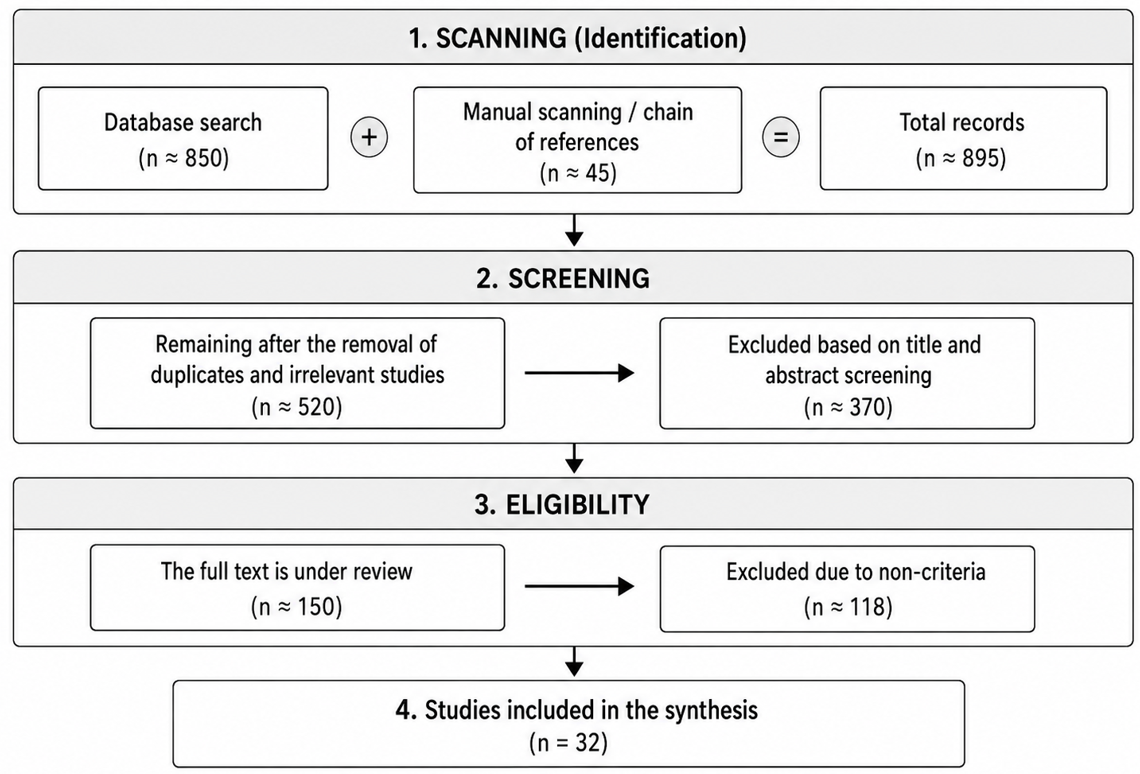
Figure 1. PRISMA 2020 Flowchart — Literature Selection Process.
Source: It was created based on the author PRISMA 2020
2.5 Quality Assessment
Studies included in the final sample underwent a three-dimensional evaluation process in terms of methodological quality and relevance. The first dimension, reliability assessment, examined the sample size, measurement validity, and transparency of results reporting in empirical studies. The second dimension, scope and timeliness assessment, considered the alignment of studies with the research questions and their publication date. The third dimension, source context assessment, treated peer-reviewed journal articles, conference proceedings, and arXiv preprints as separate categories; additional skepticism was applied to preprints. Systematic reviews and meta-analyses were considered to have the highest level of evidence, while case studies and technical reports were accepted as supporting sources.
2.6 Data Extraction and Synthesis
The following information was systematically extracted from each included study: author(s), publication year, publication type and source, educational level or context of the study, type and architecture of AI agent used, key findings, and pedagogical implications. The data extraction process involved multiple reading steps to ensure coding consistency.
A narrative synthesis approach was adopted in the literature review. The quantitative heterogeneity of the studies (different educational levels, different AI architectures, different methodologies) prevented the application of meta-analysis; therefore, the findings were addressed using the thematic synthesis method. Themes were created in line with predetermined research questions (RQ1-RQ3) and updated as needed using inductive coding.
2.7 Limitations
This research has several methodological limitations. First, the literature review is predominantly limited to English-language publications; this may lead to overlooking findings from research conducted in other languages. Furthermore, since the field is rapidly evolving, preprints, particularly on platforms like arXiv, may have been superseded by new studies that emerged after the search date. In addition, the boundary between LLM-based agent systems and general ChatGPT-type tools is not yet clearly defined in the literature; this conceptual ambiguity has sometimes complicated inclusion decisions. Finally, it has been observed that the term "AI agent" is used differently by various authors; therefore, the definitional framework adopted in this paper is detailed in Section 3.
3. Basic Concepts and Theoretical Framework
This section presents the conceptual and historical foundations for understanding AI agents in education, from classical agent definitions to their development in educational contexts.
3.1. Artificial Intelligence Agent: Conceptual Definition
Before defining AI agents in greater detail, it is necessary to distinguish AI tools, LLM-based systems, autonomous AI agents, and multi-agent systems. Although these concepts are often used interchangeably in current educational discourse, they differ substantially in terms of autonomy, planning capacity, memory use, and task coordination.
The most comprehensive and widely accepted definition of the agent concept in artificial intelligence literature belongs to Russell and Norvig
Table 2. Conceptual Distinction Between AI Tools, LLM Systems, AI Agents, and Multi-Agent Systems
Concept | Core Characteristics | Educational Example |
AI tool | Supports a specific task and does not operate with persistent goals, planning, or autonomous decision-making. | Grammar checker, plagiarism-detection tool, or automatic summarizer. |
LLM system | Generates text, responds to prompts, and usually operates reactively within a conversational interaction. | A chatbot used for question answering or a conventional Copilot interaction. |
AI agent | Pursues defined goals, plans multi-step actions, may use memory and external tools, and can monitor or revise its outputs. | An educational agent that generates activities according to a student model and learning progress. |
Multi-agent system | Coordinates multiple specialized agents that perform complementary roles collaboratively or sequentially. | A tutoring agent, assessment agent, and feedback agent working together in a learning environment. |
Table 3. PEAS Model — An Example of an AI Agent in Education
Component | Abridgement | Definition | Examples in Education |
Success Criterion | Performance | Agent's purpose | Increasing student scores, teaching concepts |
Environment | Environment | Agent's area of operation | LMS (Moodle), chat interface, virtual classroom |
Actuators | Actuators | Agent's outputs | Text response, practice question, note, warning |
Sensors | Sensors | Agent's inputs | Student questions, test results, data clicks |
Source: Adapted from Russell & Norvig
Agent types are classified according to their behavioral complexity: reactive agents that make decisions based solely on immediate perception; model-based agents that can recall past perceptions; goal-based agents that plan to achieve specific objectives; and utility-based agents that seek to maximize the highest utility. Modern LLM-based educational agents occupy the top tier of this classification, combining goal-orientedness, memory, and learning capacity
3.2. Historical Development of AI Agents in Education
The use of artificial intelligence agents in education, contrary to popular belief, predates the emergence of generative AI by a considerable margin. This process can be examined within the framework of three main, successive periods.
First period: Symbolic and rule-based systems (1966–1990s). The symbol of this period is the ELIZA program, developed by Joseph Weizenbaum at MIT between 1964 and 1966. Based on the principles of pattern matching and rule-based response generation, ELIZA, although not designed for educational purposes, is notable for being the first system to question the limits of human-machine interaction
Second period: Intelligent Tutoring Systems and machine learning (1990s–2020). During this period, ITSs gained the ability to extract students' knowledge models, perform error analysis, and generate individualized feedback. Carnegie Mellon University's Cognitive Tutor stands out as one of the most successful applications of this era; it has been shown to provide documented contributions in terms of learning outcomes measured through controlled studies in mathematics education
Third phase: LLM-based autonomous agents (2022–present). The public launch of ChatGPT in November 2022 fundamentally transformed the discussion on artificial intelligence in education. However, the real paradigm shift occurred with the emergence of agent architectures: the ability of LLMs to not only generate text but also use tools, retain memory, plan, and monitor their own output transforms these systems into truly autonomous educational agents
4. AI Agent Architecture in Education
The extent to which an AI agent can be effective in an educational environment is largely determined by its underlying architectural design. This section examines AI agents used in education along two main axes: whether the agents operate in a single-agent or multi-agent structure, and how existing real-world systems are positioned. Both axes lead to different results in terms of both software architecture and pedagogy.
4.1. Single-Agent and Multi-Agent Architectures
AI systems used in education can be categorized into two main architectural types: single-agent and multi-agent systems. In the single-agent architecture, all interaction with the student is conducted through a single LLM model. While this approach offers advantages such as simplicity of implementation and low latency, it also comes with fundamental limitations such as limited task customization, a limited context window, and a lack of validation mechanisms
Table 4. Comparison of Single-Agent and Multi-Agent Architectures in a Training Context.
Features | Single-Agent Architectural | Multi-Agent Architecture |
Complexity | Low | High |
Task customization | Limited | High (role-based) |
Fault tolerance | Low | High (cross-validation) |
Response time | Fast | Entails a risk of delay |
Context management | Limited to a single window | Distributed, extensible |
Cost | Low | High (multiple API calls) |
Training example | Question-answer bot, topic explanation tool | Personalized ITS, simulation environment |
Source: Adapted based on Becattini et al. (2025) and Guo et al (2024)
In multi-agent systems, expert agents with different roles collaborate in parallel or sequential manner to complete tasks. In an educational context, these roles can be exemplified as follows: one agent might identify a student's knowledge gaps, another might generate practice questions, and yet another might evaluate student responses and report them to the teacher. A comprehensive survey of multi-agent systems by Guo et al. (2024) reveals that these architectures exhibit significantly superior performance compared to single-agent structures in complex problem-solving and simulation scenarios
The simplicity of single-agent architectures makes them an attractive starting point, especially for educational institutions with limited technical infrastructure. On the other hand, multi-agent systems have been shown to produce more reliable results in complex learning tasks thanks to their parallel processing capabilities and cross-validation mechanisms. Indeed, multi-agent frameworks such as MetaGPT have demonstrated remarkable performance in fields such as software development and design through role-based systems that mimic human workflows
4.2. Featured LLM-Based Training Agent Systems
LLM-based educational agents developed after 2022 have rapidly diversified, encompassing both commercial and open-source solutions. Among these systems, three stand out in particular due to their widespread adoption and distinctive architectural features.
Khanmigo
Microsoft Copilot for Education
Open Source Frameworks: LangChain and AutoGen (2023–2025). LangChain and Microsoft AutoGen are the most widely used open-source frameworks for developing training agents at the academic and institutional levels. LangChain modularly integrates memory management, tool integration, and multi-step scheduling components, while AutoGen provides a multi-agent orchestration infrastructure that allows multiple agents to communicate using structured messaging protocols. Intelligent tutorial systems and automated exam generation applications built upon these frameworks are increasingly appearing in the literature on educational research.
In conclusion, the choice of AI agent architecture used in education is not only a technical decision but also a pedagogical preference. Single-agent systems offer speed and accessibility, while multi-agent structures open the door to more sophisticated learning experiences. Commercial systems like Khanmigo and Copilot provide current reference points on how these architectures can be implemented in classroom settings.
5. Pedagogical Opportunities Offered by AI Agents in Education
The contribution of AI agents to education holds the potential for a profound pedagogical transformation that goes beyond mere efficiency increases. This section examines two of the most well-documented dimensions of this potential: personalized learning and adaptive content delivery, and real-time feedback and automated assessment mechanisms. Both areas are examined based on both theoretical justifications and empirical findings.
5.1. Personalized Learning and Adaptive Content
In traditional classroom settings, it is practically impossible for a teacher to simultaneously deliver individually tailored content to dozens of students. AI agents offer concrete potential for overcoming this structural limitation. Adaptive learning systems dynamically adjust content difficulty, presentation order, and pedagogical strategy by analyzing student performance data, interaction patterns, and conceptual gaps in real time.
Indeed, a recent systematic review encompassing 25 Scopus-indexed studies reports that all research published between 2019 and 2024 shows that AI-powered personalized learning systems positively impact student achievement, motivation, and participation. These studies also document a rapid evolutionary transformation, ranging from early rule-based systems to sophisticated LLM-based agent platforms that combine natural language processing and machine learning components.
A controlled experimental study conducted with 300 students at a university in Pakistan empirically supports these findings. Students who worked with an AI platform based on deep learning algorithms showed statistically significantly higher academic performance after 20 weeks compared to those who used traditional teaching methods. Similarly, another study involving 700 undergraduate students and focusing on STEM fields revealed that the group receiving AI-powered adaptive feedback saw a 28% increase in conceptual mastery, while the control group working with traditional teacher feedback showed only a 14% improvement.
From a theoretical perspective, features such as adaptive content sequencing and student-controlled progression directly align with constructivism, a theory that views knowledge not as passive transmission but as a process in which students actively construct information through prior experiences and contextual interactions. AI-powered dialogue-based tutorial systems and social feedback mechanisms, on the other hand, align with Vygotsky's social learning theory, facilitating observation, interaction, and the collaborative construction of knowledge in a digital environment.
5.2. Instant Feedback and Automated Evaluation
In learning, the timing of feedback is as crucial as its content. In traditional education, it can take days or even weeks for a student to receive their homework or exam results; this delay weakens motivation and reinforces conceptual errors. AI agents have the capacity to eliminate these structural delays: they can provide contextually sensitive, targeted, and reasoned feedback to a student's response within milliseconds.
Table 5. Pedagogical Opportunities Offered by AI Agents: Evidence Summary
Pedagogical Opportunity | Concrete Evidence | Primary Source | Level of Evidence |
Adaptive content sequencing | Increased success & motivation (25 studies) | Duru et al. (2025) | High |
Individualized learning path | +14% difference (AI vs. traditional, n=300) | Mustafa et al. (2024) | Medium-High |
Adaptive feedback (STEM) | +28% conceptual mastery (n=700) | Mane & Jagtap (2025) | High |
Instant, context-sensitive feedback | Knowledge gap identification, deep understanding | Frontiers (2025) | Medium |
Automated multi-layered assessment | Written text, code, problem analysis | Chu et al. (2025) | Improving |
Note: Levels of evidence were evaluated based on sample size, study design, and the number of independent replications.
Intelligent tutoring systems (ITS) use machine learning methods to identify students' knowledge gaps and generate personalized feedback, thereby enabling deeper understanding and sustained intellectual engagement. While conversational AI systems deployed in Legal English courses have been reported to significantly increase student engagement and text-student interaction, concerns about potential negative impacts on critical thinking are also being raised simultaneously in the literature.
In the field of automated assessment, AI agents are evolving into systems capable of analyzing open-ended written texts, coding assignments, and problem-solving processes, going beyond multiple-choice and short-answer questions. LangChain and AutoGen-based multi-agent systems accelerate and multi-layer the assessment process by dividing tasks, with one agent generating a draft response, a second identifying errors, and a third providing corrective feedback to the student
In conclusion, the pedagogical opportunities offered by AI agents in the areas of personalized learning and real-time feedback are supported by both empirical evidence and well-established learning theories. However, it should not be overlooked that the effectiveness of these systems is closely related to variables such as student self-regulation skills, the teacher's design role, and the institutional infrastructure. The pedagogical risks and limitations overshadowing these opportunities are discussed in the following section.
6. Pedagogical Risks and Limitations
The pedagogical opportunities discussed in the previous section revealed the transformative potential of AI agents in education. However, the risks and limitations that accompany this potential require as much careful examination as the opportunities themselves. In this section, the issue of digital addiction and the weakening of student autonomy, considered the most critical pedagogical risks specific to the use of AI agents in education, is comprehensively addressed at conceptual, empirical, and theoretical levels.
6.1. Digital Addiction:A Conceptual Framework
Digital dependency on AI agents is conceptualized as a two-dimensional construct, going beyond a simple matter of tool preference or habit: tool dependency and cognitive dependency. Tool dependency refers to the student's functional reliance on AI for tasks such as note-taking, resource searching, or drafting; while cognitive dependency describes the student's tendency to delegate higher-level mental processes such as understanding, reasoning, conceptualizing, and judging to AI instead of carrying them out themselves
Cognitive miser theory strongly supports this distinction at a theoretical level. According to this theory, individuals systematically avoid deep cognitive processing when they have access to low-cost and high-efficiency tools like AI, and this gradually develops into a pattern called cognitive inertia. Social Cognitive Theory explains how this tendency is reinforced and normalized through widespread peer use and environmental pressures
6.2. The Erosion of Student Autonomy: Empirical Evidence
This risk is not merely a theoretical concern, but is also confirmed by empirical findings. A mixed-methods study conducted with 248 undergraduate students at a university in Zimbabwe found that 32.7% of participants exhibited addiction patterns in their use of generative AI. Addicted students interacted with AI an average of 18.3 times per day, and 65.8% of participants reported that their attempts to reduce usage were unsuccessful
A 2024 study by the Wharton School of Business reveals an even more striking picture: students who used ChatGPT as a study assistant performed worse on exams. This finding points to the paradoxical nature of AI dependency, suggesting that short-term productivity gains can hinder genuine learning in the long run: while students may perceive output quality as high, their independent problem-solving skills are actually weakening
Studies on the AIDep-22 scale developed in China further clarify this mechanism. Students fail to notice a decline in their true critical thinking skills when they incorrectly attribute the high-quality output produced by AI to their own abilities. Cognitive psychology explains this phenomenon with the concept of schema weakening: when external agents constantly generate ideas and structures for specific tasks, the user's internal schemas related to these tasks lose power due to disuse
6.3. Educational and Institutional Dimensions
The consequences of AI dependency extend beyond the individual student level to institutional and sociological dimensions. A systematic review encompassing 75 articles classifies ethical risks in education across three dimensions: technology (data privacy, algorithmic bias), education (homogeneous student development, deviation from educational goals, weakening of teacher-student relationships), and society (digital divide, lack of accountability). Within this framework, AI dependency stands out not merely as an individual risk, but as a systemic problem
A 2026 report by the Brookings Institute adds a particularly noteworthy dimension to the issue from the perspective of children and young people. The anthropomorphic design of AI platforms—their tone of voice, mimicked empathy, and carefully constructed communication patterns—leads young users to confuse the algorithmic with the human; this directly and negatively impacts both their ability to form authentic social relationships and their judgment of trustworthiness. The report also highlights the American Psychological Association's warning that AI companion apps could exploit emotional vulnerabilities and create digital attachment disorder
Table 6. Multidimensional Analysis of the Risk of Digital Addiction and Student Autonomy.
Risk Dimension | Mechanism | Empirical Evidence | Theory |
Cognitive dependence | Delegating high-level operations to AI | AIDep-22 scale (China, 2025) | Cognitive Miser Theory |
Loss of learning outcome | Short-term efficiency ≠ real learning | Wharton study (2024) | Schema Weakening |
Tool dependence pattern | Compulsive use, failure to reduce | Zimbabwe study, n=248 (2025) | Social Cognitive Theory |
Emotional dependence | Anthropomorphic design, digital connectivity | Brookings & APA report (2026) | Attachment Theory |
Institutional/systemic risk | Homogeneous development, deviation from training objective | Systematic review of 75 articles (2025) | Critical Digital Sociology |
Note: Evidence and theory matches are based on the theoretical frameworks in the primary sources examined.
In conclusion, digital addiction and the erosion of student autonomy are not merely individual behavioral problems; they are multifaceted issues encompassing pedagogical design, institutional policy, and technology ethics. The way to manage this risk is not to exclude AI agents from the educational environment, but to develop pedagogical frameworks that position students as critical users, not consumers. This discussion is deepened in the next section within the context of synthesizing the findings and making policy recommendations.
7. Discussion
This section provides an integrated assessment of the findings presented in previous sections. First, the tension between pedagogical opportunities and risks is synthesized, and then the gaps in the existing literature are systematically identified.
7.1. Synthesis of Findings: The Balance Between Opportunities and Risks
The findings of this study reveal a simultaneous optimistic outlook and serious concerns regarding the role of AI agents in education. On the one hand, there are empirically validated gains in personalized learning and real-time feedback: systems offering adaptive content have consistently reported increased student achievement and motivation, with differences of up to 28% in conceptual mastery in STEM contexts. On the other hand, findings regarding the risk of digital addiction overshadow these gains: The study by Bastani et al.
This tension is not accidental, but structural. The pedagogical value of AI agents largely depends on how they are positioned: as complementary tools or as cognitive load-shifting mechanisms? It has been consistently documented in the literature that while these systems are strong in supporting the lower levels of Bloom's Taxonomy (remembering, understanding, applying), they carry structural limitations in developing higher-level skills (analysis, synthesis, creative thinking). Therefore, instead of excluding AI agents from the educational environment, the main priority should be to consciously manage this dual structure and reflect it in pedagogical design.
From an architectural perspective, multi-agent systems are seen as having the capacity to offer more sophisticated learning experiences; however, this capacity comes with higher costs, risk of delay, and design complexity. The simplicity and accessibility of single-agent systems, on the other hand, provide an advantageous starting point, especially in institutions with limited infrastructure. In this context, the alignment between architectural choice and pedagogical goals emerges as a critical variable determining system effectiveness.
7.2. Gaps in the Literature
The studies reviewed reveal that research on AI agents in education has matured considerably, but also highlight that significant gaps in the field still need to be addressed.
Table 7 links the major gaps identified in the literature to concrete methodological and implementation-oriented directions for future research.
The sum of these gaps indicates that the field of AI agents in education is a rapidly developing research area that has not yet reached maturity. The lack of interdisciplinary architectural standards is particularly noteworthy: computer scientists optimize system performance while educators measure pedagogical impact, and these two communities often work in parallel without establishing a common language. This structural disconnect leads to significant inefficiencies in both research design and application practice
In conclusion, this literature review reveals that AI agents in education hold both transformative potential and structural risks that require management. Realizing this potential necessitates a holistic approach that considers pedagogical theory, architectural design, and ethical frameworks together. The following section presents general conclusions and suggestions for future research in light of these findings.
Table 7. Key Literature Gaps in AI Agent Research in Education.
Space | Description | Recommended Research Approach | Source |
Lack of geographical diversity | The vast majority of studies have been conducted in Asia and North America; regions such as Africa, the Middle East, and the Balkans are underrepresented. | Conduct multi-site and comparative mixed-methods studies in underrepresented regions, considering cultural, linguistic, socioeconomic, and technological differences. | MDPI (2025) |
Long-term impact studies | Most of the current research focuses on short-term interventions; the impact of AI agents on learning outcomes on a year or term basis is unknown. | Conduct longitudinal quasi-experimental or controlled studies over at least one semester, measuring retention, academic achievement, self-regulation, and student autonomy. | Frontiers (2025) |
Teacher perspective | The focus of research is predominantly on students; empirical studies on how teachers interact with AI agents are insufficient. | Use mixed-methods research combining teacher surveys, interviews, classroom observations, and learning-analytics data. | Frontiers (2025) |
Interdisciplinary architectural standards | Common standards for AI agent design and evaluation have not been established between computer science and educational sciences. | Employ design-based research and interdisciplinary co-design studies to develop evaluation frameworks that integrate technical performance, pedagogical effectiveness, ethical safeguards, and usability. | |
Research at the K-12 level | Higher education remains dominant; AI agent applications at the primary and secondary school / education levels remain limited in the literature. | Conduct age-appropriate classroom-based intervention studies with teacher mediation, parental consent, ethical safeguards, and developmentally appropriate learning measures. | |
Addiction management frameworks | While the risk of digital addiction has been documented, evidence-based pedagogical frameworks to mitigate it are still under development. | Test controlled pedagogical interventions, such as reflective prompts, delayed-answer strategies, AI-use guidelines, teacher monitoring, and self-regulation activities. |
Source: Synthesized by us based on the systematic review studies examined.
8. Conclusion
This study examines the use of AI agents in education through a systematic literature review focusing on architectural and pedagogical opportunities and risks. This final section summarizes the answers to the research questions and identifies priority directions for future research.
8.1. Answers to Research Questions
This literature review provides the following answers to the three research questions presented in the introduction:
RQ1. AI agents used in education can be classified into two main categories architecturally: single-agent and multi-agent. The core components are defined as perception, planning, memory, tool use, and reflection. Single-agent systems offer speed and accessibility, while multi-agent structures provide greater flexibility and fault tolerance in complex pedagogical tasks. Khanmigo and Copilot for Education are prominent examples of these architectures implemented in practice.
RQ2. AI agents offer documented pedagogical opportunities in training processes through personalized learning, adaptive content, and real-time feedback. Controlled experimental studies consistently demonstrate that these systems positively impact student achievement and motivation. Constructivism and Vygotsky's theory of social learning provide the theoretical basis for these opportunities.
RQ3. The most critical risks have been identified as digital addiction and the erosion of student autonomy. This risk, theoretically supported by Cognitive Miser Theory and schema attenuation concepts, and empirically supported by the studies of Bastani
8.2. Recommendations for Future Research
The literature gaps revealed in this study offer a concrete roadmap for future research. The following five directions are considered priorities for the advancement of the field:
· Long-term impact studies: The effects of AI agent interventions on student development should be measured using longitudinal designs on a yearly or semester basis.
· Geographic diversity: Contextual empirical studies should be conducted in regions with low representation levels, such as the Balkans, the Middle East, and Africa.
· Interdisciplinary design standards: Mechanisms should be established for collaboration between the computer science and education communities to develop common assessment frameworks and architectural standards.
· Addiction management pedagogy: Evidence-based teaching strategies and curriculum design principles aimed at reducing the risk of digital addiction should be developed and tested in the classroom.
· K-12 and vocational education contexts: To balance the existing literature, which is heavily focused on higher education, applied research should be increased at the primary, secondary, and vocational school/education levels.
AI agents are neither a miracle cure nor a threat to be avoided in education. When integrated with pedagogical principles, ethical frameworks, and a human-centered design approach, these systems have the potential to truly enrich learning environments. Making this integration possible is a shared responsibility for researchers, practitioners, and policymakers alike.
ACKNOWLEDGEMENT
The authors have no acknowledgments to declare.
FUNDING
This research received no specific grant from any funding agency in the public, commercial, or not-for-profit sectors.
AUTHORS’ CONTRIBUTIONS
All authors contributed to the conceptualization, literature synthesis, manuscript drafting, critical revision, and final approval of the chapter.
CONFLICT OF INTEREST
The authors declare no conflict of interest.
DATA AVAILABILITY
No empirical dataset was generated or analyzed in this chapter.
ETHICAL STATEMENT
This chapter does not involve human participants, personal data, animal subjects, or experimental procedures requiring ethics committee approval.
DECLARATION OF AI USAGE
AI-based tools were used only for language refinement. The authors reviewed, verified, and approved the final content.